 Back to Guides
Why Roofing Prices Rose So Much in the Early 2020s (And What's Changed Since)


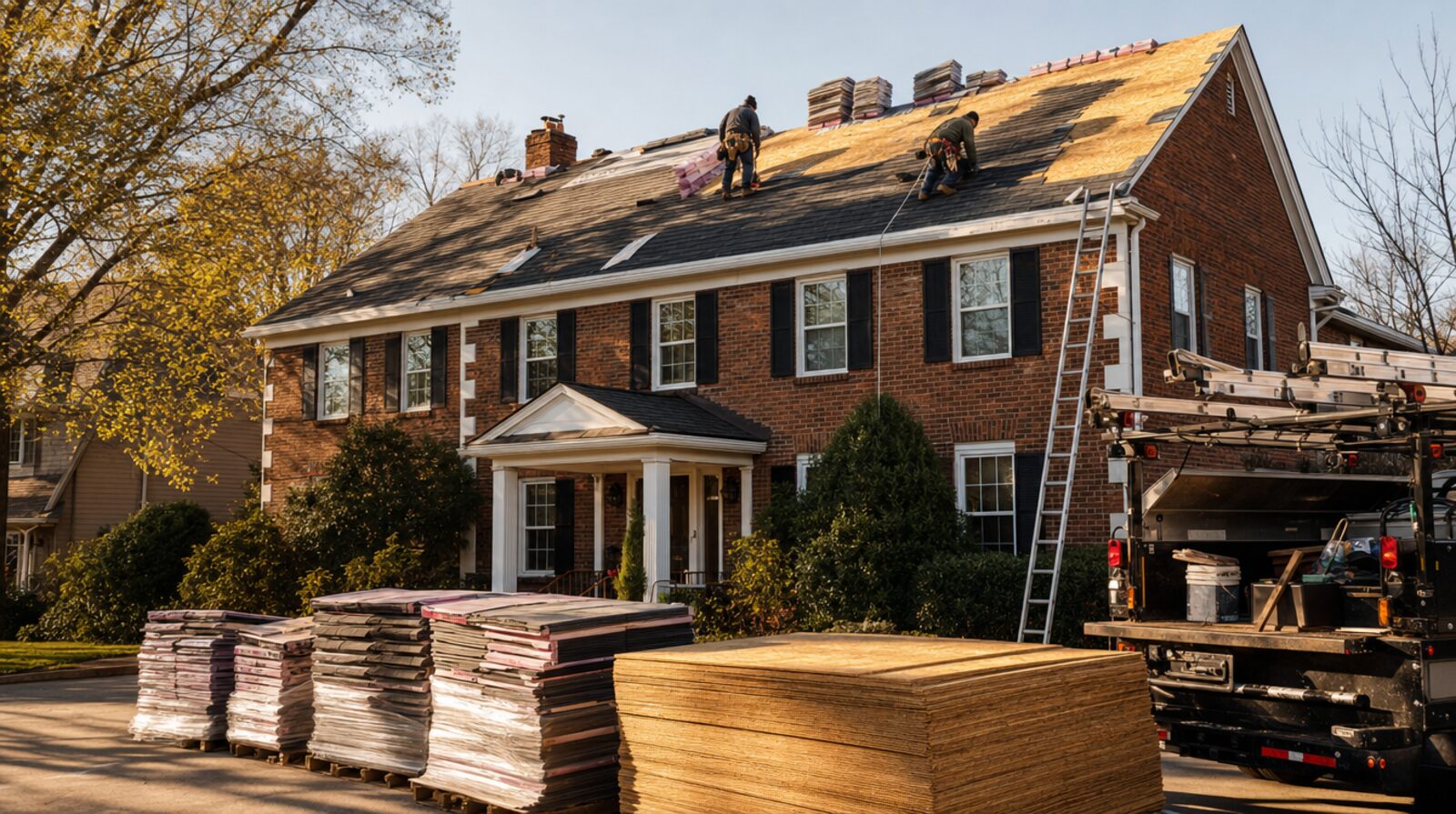
If you priced out a roof replacement in 2021 or 2022 and nearly fell over, you weren't imagining things. We watched shingle invoices change from one week to the next during that stretch, something we hadn't seen in decades of ordering material for Triad homes. Homeowners want to know if that was a one-time shock or the new normal. Here's what actually happened, and what we're seeing now that things have settled.
What Actually Drove the Increases
It wasn't one thing. It was several problems stacking on top of each other at the same time.
- Asphalt and petroleum costs. Shingles are an asphalt-based product, and asphalt is a byproduct of oil refining. When oil markets got volatile, the raw material that goes into every bundle got more expensive to produce, and manufacturers passed that straight through to distributors.
- Lumber price swings. Decking, framing lumber, and OSB sheathing went through wild price movements. A roof with any deck repair or replacement suddenly cost a lot more just in wood, even before you added shingles.
- Freight and trucking bottlenecks. Shingles are heavy and shipped by the truckload. When trucking capacity got tight and diesel prices climbed, freight surcharges started showing up as a separate line item on supplier invoices, something we'd rarely seen before.
- Labor shortages. Skilled roofing crews were in short supply nationally. Fewer people entering the trades, combined with a surge in reroofing demand, meant contractors were competing harder for good labor, and that cost got reflected in installed pricing, not just material pricing.
- Manufacturer allocation. For stretches of this period, suppliers couldn't get certain shingle lines at all. When a product goes on allocation, distributors ration what they have, and contractors sometimes had to substitute colors or product lines just to keep a job moving.
We had weeks where we'd quote a job on Monday and the material cost had moved by the time we ordered on Thursday. That kind of volatility is genuinely rare in this business, and it's part of why we started building shorter price-hold windows into our quotes during that stretch.
How This Showed Up on Real Triad Jobs
A few practical effects homeowners in Greensboro, High Point, and Winston-Salem actually felt:
- Quotes had shorter shelf lives. A price good for 30 days in normal times might only hold for a week or two when material costs were moving fast.
- Color and product availability got unpredictable. Homeowners sometimes had to choose from what was actually in stock rather than every color in a manufacturer's line.
- Scheduling stretched out. With more reroofing demand and tighter labor, it wasn't unusual for good contractors to be booked out further than homeowners expected, especially heading into storm season.
- Insurance claim jobs got more complicated. When material costs moved between the time an adjuster wrote an estimate and the time work actually started, that gap sometimes needed to be addressed with the insurance company before work could proceed.
None of that reflected contractors padding margins. It reflected a supply chain that was genuinely strained at every link, from the refinery to the lumber mill to the truck to the crew on your roof.
What's Changed Since
Prices have not gone back to where they were before all of this started, and they likely never will. But the volatility itself has calmed down considerably. A few things we're seeing now:
- Prices are stable, if not lower. Material costs still move with the broader economy, but we're not seeing the week-to-week swings that defined 2021 and 2022. A quote we write today is a quote we can generally still honor a month from now.
- Availability is back to normal. Manufacturer allocation issues have largely resolved. If you want a specific shingle color or product line, we can usually get it without a long wait or a substitution conversation.
- Labor markets have loosened somewhat. Scheduling is more predictable than it was, though good crews are still worth waiting for over the busiest fall and spring stretches.
- Freight costs remain a real line item. This is one area that hasn't fully reverted. Trucking and fuel costs are still a meaningful part of the delivered cost of material, even if they're not spiking the way they were.
What This Means If You're Planning a Roof Now
A few practical takeaways for anyone weighing a roof replacement in the Triad right now:
- Get quotes in writing with a clear validity window. Ask how long the price is good for and what happens if material costs shift before work starts.
- Ask about product availability up front. If you have your heart set on a specific color or shingle line, confirm it's actually in stock rather than assuming it is.
- Don't assume the highest quote means the best material. Ask what underlayment, ventilation, and flashing details are included, not just the shingle brand. Two quotes with the same shingle can differ a lot in what's underneath it.
- Book ahead of storm season if you can. Spring and late summer still bring a rush of roofing demand across the Piedmont, and scheduling tightens up fast once storms roll through.
- Talk to your insurance company early if it's a claim. If your roof was damaged and you're working through a claim, loop in your contractor and adjuster early so everyone is pricing the same scope of work.
The last few years were a genuine anomaly in this industry, not a permanent shift in how roofing gets priced. If you're getting quotes today, you're working with a much more stable market than homeowners faced in 2021 and 2022, even if the baseline cost of a roof sits higher than it did a decade ago. A straightforward conversation with a local contractor about what's actually driving your specific quote will tell you more than any national headline will.
Stop Guessing on Price
Get precise measurements and a detailed price range for your specific roof right now using our AI technology. No home visit required.
Get my price