 Back to Guides
What Homeowners Insurance Actually Covers (and Doesn't) for Roof Damage


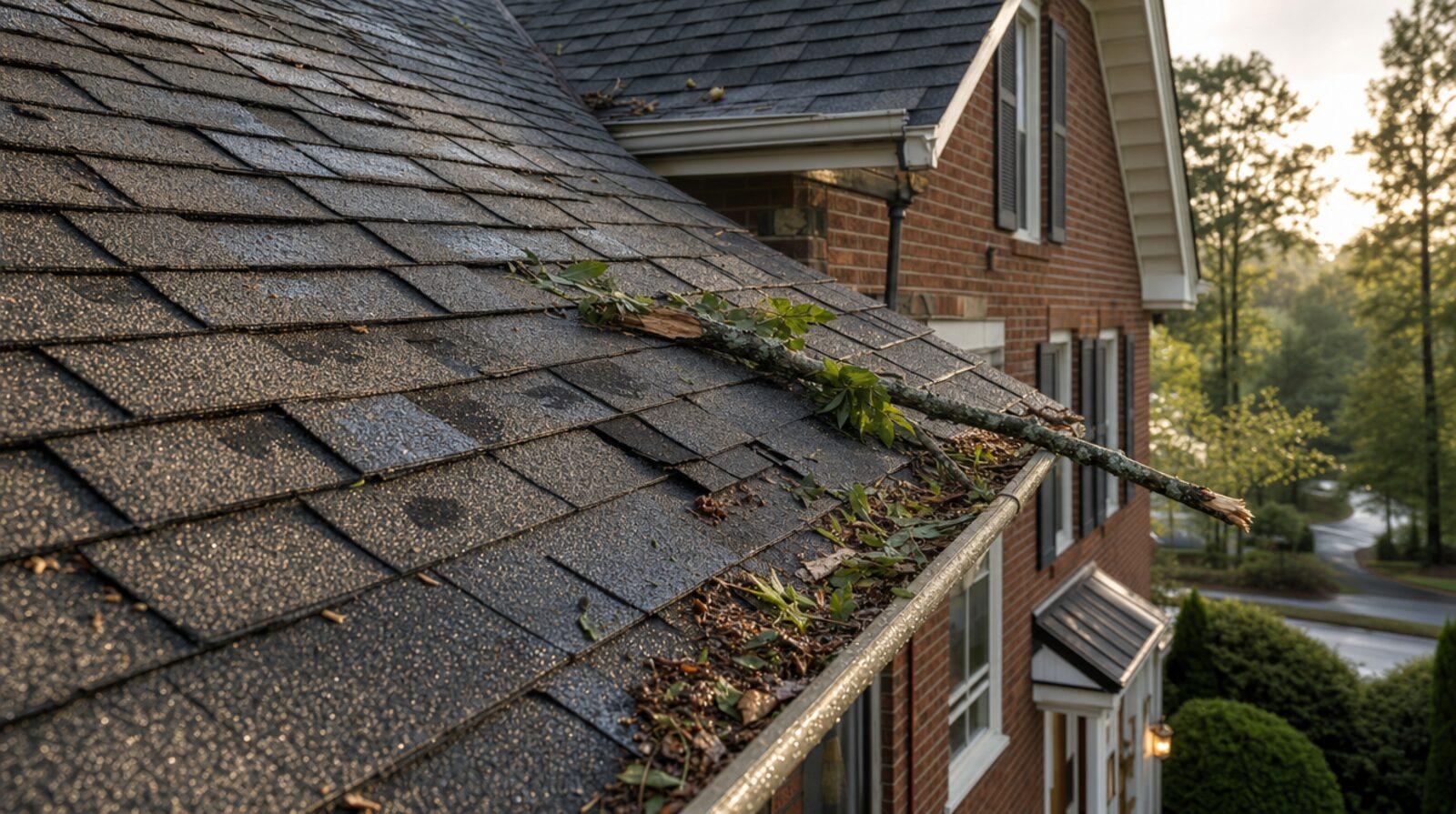
Every spring we get the same phone call. A homeowner in Greensboro or Winston-Salem notices a stain on the ceiling after a hard rain, calls their insurance company, and is surprised to learn the claim is denied. Not because the roof isn't damaged — it clearly is — but because the cause of that damage falls outside what the policy actually promises to pay for. After years of climbing roofs across the Triad and sitting across the table from adjusters, we've learned that most of the frustration homeowners feel comes down to one thing: nobody explained the difference between "damaged" and "covered" before the storm hit.
The Basic Line Insurance Draws: Sudden vs. Gradual
Homeowners insurance is built around the idea of a sudden, accidental event. Hail, wind, a fallen tree limb, a fire — these are things that happen to your roof, not things that happen because of how your roof was built or maintained. That distinction is the single most important concept in this whole topic.
- Typically covered: Wind damage that lifts or tears shingles, hail bruising or punctures, a tree limb or whole tree falling on the structure, fire damage, and in some cases the weight of ice or snow accumulation.
- Typically NOT covered: Wear and tear from age, granule loss on shingles that have simply reached the end of their service life, poor original installation, lack of maintenance, and damage that developed slowly over multiple seasons before anyone noticed.
An adjuster's job is to figure out which category your damage falls into. A brand-new hole from a broken limb after last week's thunderstorm is easy to categorize. A slow leak around a chimney flashing that's been curling up for two years is a much harder case to make — and it's the kind of claim that gets denied more often than homeowners expect.
Where Triad Homeowners Get Tripped Up
Wind and Hail Exclusions or Higher Deductibles
Because central North Carolina sees regular severe thunderstorm activity and occasional hail, many policies here carry a separate wind/hail deductible that's higher than your standard deductible — sometimes written as a percentage of your home's insured value rather than a flat dollar figure. Read your declarations page. A 2% wind/hail deductible on a $300,000 insured home is $6,000 out of pocket before coverage kicks in, which surprises a lot of people who assumed their flat $1,000 deductible applied to every claim.
Age-Based Depreciation on Older Roofs
Some carriers shift roofs over a certain age (commonly 15-20 years) from full replacement cost coverage to "actual cash value." In practice, that means the payout factors in depreciation for the roof's age and condition, so an older roof may only net you a fraction of what a full tear-off and replacement actually costs. This is worth confirming with your agent before you need it, not after.
Pre-Existing Damage and Maintenance Neglect
If an adjuster climbs up and sees moss buildup, cracked and curling shingles throughout, or flashing that's clearly been failing for a long stretch of time, they can reasonably argue the damage predates the storm event or is a maintenance issue rather than a covered peril. This is exactly why annual roof inspections matter beyond just catching small problems early — they create a documented record that your roof was in good condition before the storm, which matters if you ever need to make that case to an insurance company.
Cosmetic Damage on Certain Materials
Some hail-prone regions see policies with cosmetic damage exclusions, particularly for metal roofing, that pay for functional damage (punctures, dents that compromise water-shedding) but not purely cosmetic marks that don't affect performance. Ask specifically whether your policy has this kind of language if you have or are considering a metal roof.
How to Put Yourself in the Best Position
- Document your roof before you need to. Photos from a recent inspection, dated and kept somewhere accessible, are the best evidence you can have that damage is new rather than old.
- Call for an inspection soon after a storm, not months later. The longer damage sits exposed to weather, the more it can be argued that subsequent deterioration — not the original event — caused the bulk of the harm.
- Get an independent assessment before or alongside the adjuster's visit. A contractor who inspects roofs regularly in this area can identify wind-lifted shingles or hail bruising that's easy to miss from the ground, and can put it in writing.
- Know your policy's specific deductibles and coverage type (replacement cost vs. actual cash value) before storm season, not during a claim dispute.
- Keep up with basic maintenance — clearing debris, addressing minor flashing issues, trimming overhanging limbs — since neglect is one of the most common reasons adjusters push back on a claim.
What a Contractor Can and Can't Do For You
A reputable roofing contractor can document damage thoroughly, explain in plain terms what caused it, and give you an honest estimate of what repair or replacement actually costs in this market. What we can't do — and you should be skeptical of anyone who claims otherwise — is promise you a specific outcome from your insurance company. The adjuster and your carrier make that call based on your policy language and their inspection. Our role is to make sure you walk into that process with clear documentation and a realistic understanding of your roof's condition, so you're negotiating from facts rather than guesswork.
If you take one thing from this: read your declarations page before you ever need to file a claim. Know your deductible type, your coverage type, and whether your roof's age has already shifted you into depreciated payouts. That single hour of homework saves Triad homeowners real money and real frustration every storm season.
Stop Guessing on Price
Get precise measurements and a detailed price range for your specific roof right now using our AI technology. No home visit required.
Get my price