 Back to Guides
Roof Replacement Costs: What Actually Drives the Price Up or Down


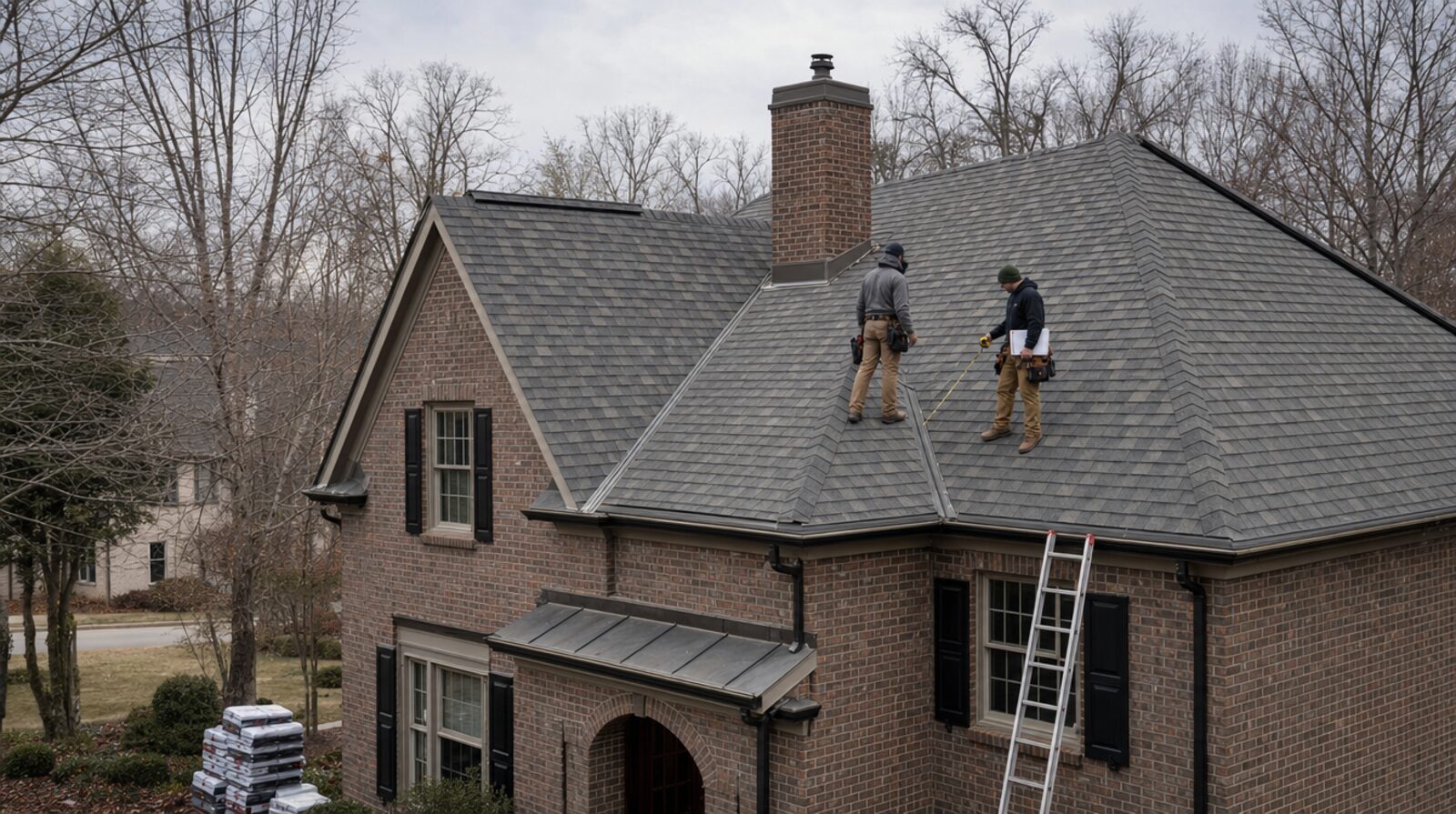
Every week somebody calls us after getting three wildly different numbers for the same roof. One bid comes in low enough to raise an eyebrow, another is double the first, and the homeowner is left wondering who's telling the truth. The honest answer is that roofing costs are driven by a handful of real, measurable factors — not by how good a salesman is at closing. Once you know what those factors are, you can look at any estimate and understand exactly why it costs what it costs.
Size and Complexity Move the Number More Than Material Choice
Most homeowners assume shingle brand is the biggest cost driver. It isn't. The two biggest factors are square footage and roof complexity, and they multiply against each other.
A simple gable roof — two flat planes meeting at a ridge, few penetrations — is the cheapest shape to cover per square (a "square" is 100 square feet of roof area). Add hips, valleys, dormers, and multiple roof planes, and the same square footage can cost 20-40% more to install because of:
- Cut waste. Every valley and hip means angled cuts, and angled cuts mean shingles get trimmed and discarded rather than fully used. A cut-up roof can waste 12-15% more material than a simple one.
- Labor time. Valleys need to be woven or laced properly, flashed with metal or ice-and-water membrane, and tied into the surrounding shingle courses correctly. That's slower, more careful work than running shingles across an open field.
- Pitch. Anything steeper than about a 7:12 slope requires roof jacks, toe boards, and extra safety rigging, which slows the crew down and adds a steep-charge to most estimates. Roofs over 9:12 or 10:12 often need harness systems, which slows things further.
- Story height. A second- or third-story roof needs ladder jacks, staging, or lift equipment to move material and debris safely, and that time gets built into labor.
This is why two houses with the same total square footage can land tens of hundreds of dollars apart — the simpler one is just faster and less wasteful to build.
What's Underneath Matters as Much as What's on Top
The shingles are the part everyone sees, but a huge share of cost variance comes from what's happening under them, and you often can't know the full scope until the old roof comes off.
- Decking condition. Plywood or OSB sheathing that's soft, delaminated, or water-stained has to be replaced, usually priced per sheet. Roofs that have had a slow leak for a while, or ones that were originally built with spaced (skip) sheathing under wood shakes, often need more decking work than expected.
- Layers to remove. Piedmont Triad building code allows a maximum of two layers of asphalt shingles on most residential roofs. A roof with one existing layer costs less to tear off than one with two, and a full tear-down to bare decking takes real labor and disposal cost regardless of layer count.
- Flashing and ventilation upgrades. Old step flashing around chimneys and sidewalls, worn pipe boots, and undersized or blocked attic ventilation are common finds once the shingles are off. Replacing these properly during a re-roof is far cheaper than doing it as a separate project later, but it does add to the number.
- Ice and water shield requirements. Even in our climate, code typically calls for self-adhering waterproof membrane in valleys and along eaves in vulnerable areas. This material costs more per square than standard felt underlayment.
A good contractor will inspect your attic and, where possible, your existing roof before quoting — and will tell you plainly which of these items are likely versus which are just possibilities that could add cost once the tear-off starts.
Material Choice: Where the Real Range Lives
Once size, complexity, and structural condition are accounted for, material is where you have the most control over your final number.
- 3-tab asphalt shingles are the budget option — thinner, flatter profile, shorter lifespan, and increasingly hard to even find as manufacturers phase them out in favor of architectural styles.
- Architectural (dimensional) asphalt shingles are what most Triad homes use today. They're thicker, have a layered look, hold up better in wind, and sit in the middle of the cost range.
- Impact-resistant shingles cost more upfront but can qualify homeowners for insurance premium discounts in some cases — worth asking your insurance agent about directly.
- Metal roofing costs meaningfully more than asphalt per square but can last several times as long with far less maintenance, which changes the math if you're planning to stay in the home long term.
Underlayment quality, ridge cap style, and the brand's warranty tier also shift price, but material is the one variable you're actively choosing rather than one dictated by your house's shape and age.
Timing and Access: The Overlooked Factors
Two things homeowners rarely think about also move the price:
- Season. Spring and fall are peak demand in the Triad, when everyone wants work done before or after our hot, humid summers. Booking in late winter, when crews have more open schedule, can sometimes mean better pricing and faster start dates.
- Access and staging. Fenced-in backyards, mature landscaping close to the house, or a driveway too narrow for a dumpster all add labor time for material staging and debris hauling. It's a smaller factor than pitch or complexity, but it's real, and a contractor who walks your property before quoting will catch it.
What This Means for Your Estimate
When you're comparing bids, don't just look at the bottom-line number. Ask each contractor to break out labor, material, and any anticipated decking or flashing allowances. A quote that's dramatically lower than the others is usually missing something — fewer layers of tear-off accounted for, cheaper underlayment, or no allowance for rotten decking that will become a change order later. The roofs that hold up longest, and cost the least over their lifetime, are the ones priced honestly from the start based on the actual size, shape, and condition of your specific house — not a generic per-square rate pulled off a price sheet.
Stop Guessing on Price
Get precise measurements and a detailed price range for your specific roof right now using our AI technology. No home visit required.
Get my price