 Back to Guides
Vent Boots and Pipe Collars: The Cheap Part That Causes Expensive Leaks


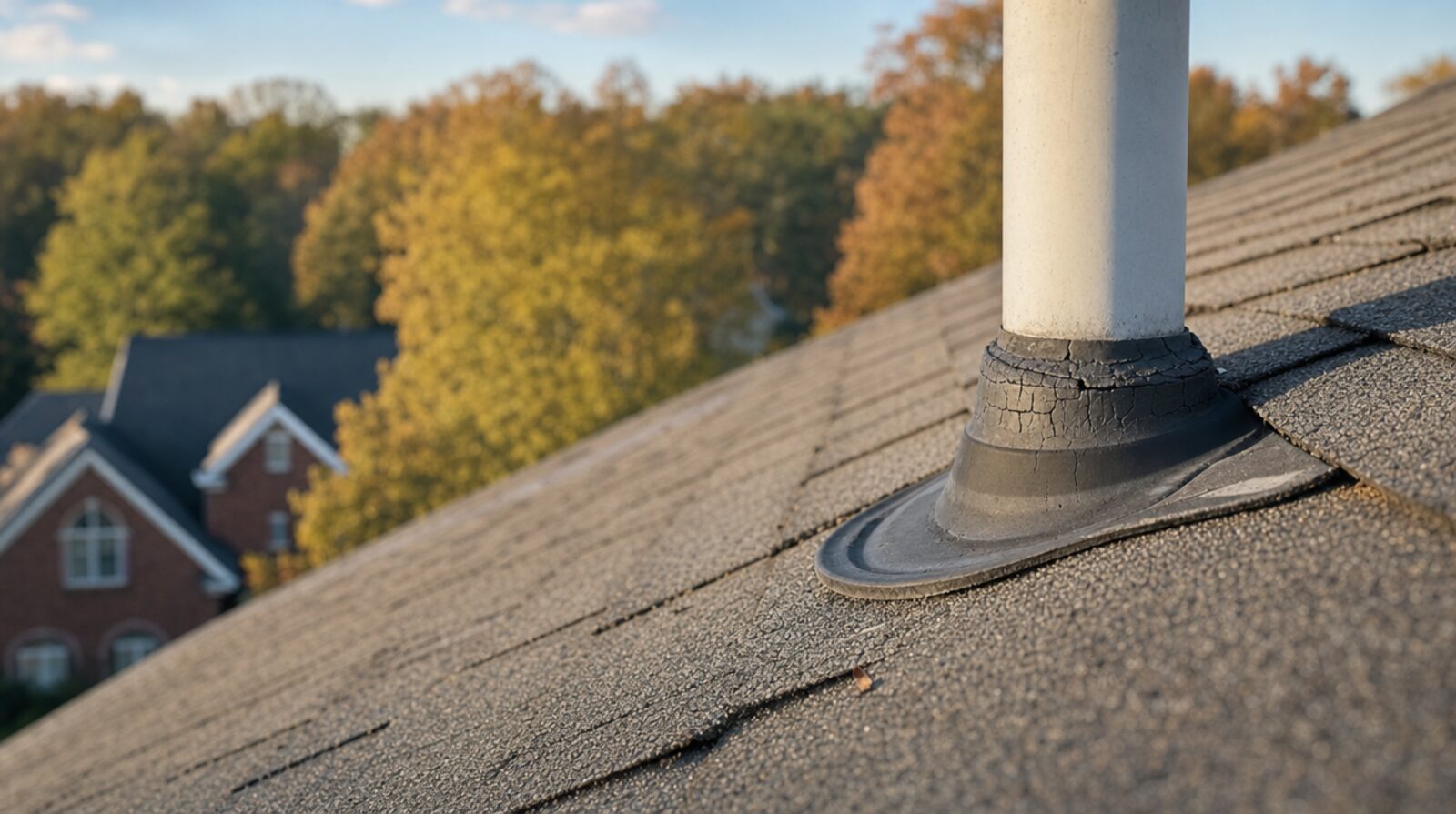
Every year we get called out to a house with a fresh ceiling stain in a hallway or spare bedroom, and every year a good number of those calls end the same way: the culprit isn't the shingles, the decking, or anything dramatic. It's a two-dollar piece of rubber wrapped around a plumbing vent pipe that finally gave out. Vent boots and pipe collars are some of the smallest components on your roof, but they cause a disproportionate share of the leaks we repair across Greensboro, High Point, and Winston-Salem.
If you've never thought about the rubber collar around the pipes poking through your roof, you're not alone — most homeowners don't know it exists until it fails. Here's what it does, why it fails, and what to look for.
What a Vent Boot Actually Does
Every home has plumbing vent stacks — those pipes sticking up through the roof, usually PVC or cast iron, that let sewer gas escape and let air into the drain system so water flows properly. Where each pipe punches through the roof deck, it needs a watertight seal. That's the vent boot's job: a base flange lies flat against the roof under the surrounding shingles, and a rubber or neoprene collar rises up and hugs the pipe tight.
Done right, water runs down the shingles, over the flange, and off the roof without ever touching the pipe penetration. The rubber collar is what does the sealing work, and it's almost always the weakest link in the whole roof system — weaker than the shingles around it, weaker than the metal flange it's molded to, and the first thing exposed to direct, unfiltered sun for most of the day.
Why the Rubber Fails Before Anything Else Does
Piedmont Triad summers are hard on rubber. UV exposure, heat cycling, and the freeze-thaw swings we get from December through February all work against that collar. Over time it dries out, cracks, and loses its grip on the pipe. A few things we consistently see:
- Cracking and splitting — the rubber turns brittle and splits vertically along the collar, usually on the sun-facing side.
- Shrinkage — the collar pulls away from the pipe just enough to open a gap you can slide a finger into.
- Granule loss around the base — foot traffic or just age wears the flange bare, exposing the metal to rust.
- Nail pops at the flange edge — as the roof deck expands and contracts, fasteners back out and create their own tiny entry points.
The average rubber boot lasts somewhere in the neighborhood of 10 to 15 years — noticeably shorter than the 25-plus years you'd expect from the shingles around it. That mismatch is the whole problem: a roof can be in generally good shape and still be leaking because the boots have simply aged out on their own schedule.
Why This Particular Leak Is So Sneaky
Vent boot leaks rarely show up as a dramatic drip during a storm. More often it's a slow seep that tracks along a rafter or down a pipe chase before it ever stains drywall, so by the time you see a spot on the ceiling, water has usually been getting in for a while. A few reasons this leak type causes more damage than its size suggests:
- Vent stacks are frequently located over closets, hallways, or bathrooms — places homeowners don't look at daily.
- Because the entry point is a pinhole crack rather than an open gap, the leak can be intermittent, showing up only during wind-driven rain from a certain direction.
- Attic insulation soaks up the moisture before it ever reaches the ceiling drywall, which delays the visible sign but extends the timeline of hidden damage to the decking and framing.
A roof that's 12 years old with 25-year shingles can still have failed vent boots. Age the boots separately from the shingles — they're not on the same clock.
What to Look For From the Ground and the Attic
You don't need to get on the roof to catch this early. From the ground with a pair of binoculars, or from a ladder at the eave, look at each pipe penetration for:
- Visible cracks or splits in the rubber collar
- Daylight or a gap between the collar and the pipe
- Rust streaks running down the pipe or staining the flange
- Lifted or curling shingles immediately around the base
Inside the attic, on a bright day, check whether daylight is visible around any pipe where it passes through the roof deck — that's an immediate red flag. Also feel the decking and any nearby framing for soft spots, and look for dark staining or mineral streaking on the wood, which tells you water has been tracking through even if it hasn't reached the living space yet.
Repair, Not Full Replacement — Most of the Time
The good news is that a failed vent boot is almost always a targeted repair, not a full roof job. A proper fix involves lifting the surrounding shingles, removing the old flange, setting a new boot with fresh underlayment and sealant at the pipe collar, and re-lacing the shingles back over it so the water path is restored correctly. Cutting corners here — caulking over a cracked collar instead of replacing it, for instance — buys a homeowner a year or two at best before the same spot is leaking again.
Because these components fail on their own timeline, we treat vent boots as a standard check item any time we're already on a roof for an inspection or repair, even if the original call was about something else entirely. It's a small thing to check and an expensive thing to ignore. If your roof is past the ten-year mark and you haven't had the penetrations looked at specifically, it's worth having a contractor check them the next time you're due for maintenance, before that small crack turns into a stained ceiling.
Stop Guessing on Price
Get precise measurements and a detailed price range for your specific roof right now using our AI technology. No home visit required.
Get my price