 Back to Guides
Understanding Roof Pitch and Why It Matters for Materials and Cost


What Roof Pitch Actually Means
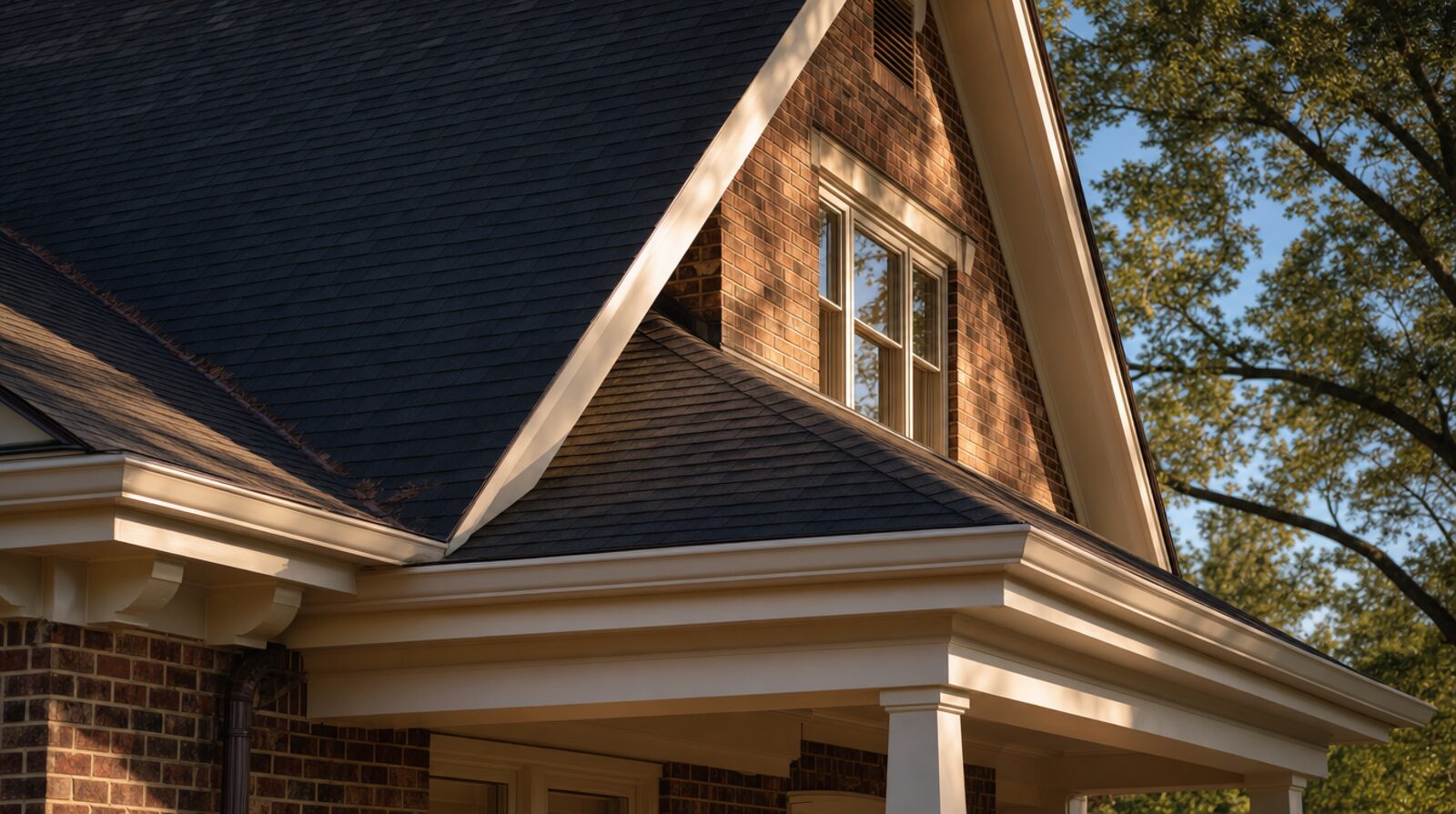
Roof pitch is the measurement of how steep your roof is, expressed as a ratio of vertical rise to horizontal run over a 12-inch span. A "6-in-12" pitch means the roof rises 6 inches for every 12 inches it runs horizontally. Walk any neighborhood in Greensboro, High Point, or Winston-Salem and you'll see the range firsthand — older brick ranch homes tend to sit low and flat around 3-in-12 or 4-in-12, while the steeper Craftsman and traditional two-story homes common across the Piedmont Triad often run 8-in-12 or higher.
We break pitch into three rough categories when we're walking a roof:
- Low-slope (2-in-12 to 4-in-12): Common on additions, porches, and some ranch-style homes. Water moves slower here, so material choice matters more.
- Conventional (4-in-12 to 9-in-12): The range most standard asphalt shingle roofs in our area fall into. This is the sweet spot for the majority of Triad homes we work on.
- Steep-slope (9-in-12 and up): Dramatic rooflines, dormers, and some custom builds. Beautiful from the curb, but they change the whole approach to labor and safety.
Why Pitch Drives Material Choice
Every roofing material has a manufacturer-listed minimum slope, and it isn't a suggestion — it's the point at which the product stops being able to shed water reliably.
- Standard three-tab and architectural asphalt shingles generally require at least a 2-in-12 to 4-in-12 slope, and below 4-in-12 they typically need modified underlayment installation methods to compensate for slower water runoff.
- Low-slope roofs under 2-in-12 usually rule shingles out entirely. We're looking at membrane systems — TPO, modified bitumen, or similar — because shingles rely on gravity and overlap to shed water, and a nearly flat plane just doesn't give water enough of a head start before it can work sideways under a shingle edge.
- Metal roofing is more forgiving on the low end and can often go down to a 3-in-12 pitch with the right panel and seam type, which is part of why we recommend it so often on additions and porch roofs tied into a steeper primary roofline.
- Slate and clay tile, when we do see them on older Triad homes, usually want a steeper pitch — typically 4-in-12 minimum, with many manufacturers preferring 6-in-12 or better — both for water shedding and because the weight load calculations assume a certain slope.
Pitch also changes how a roof ages. A steep roof sheds water and debris quickly, so it tends to stay drier and see less algae streaking and granule wear over time. A low-slope roof holds water and organic debris longer after a storm, which is why we watch those roofs more closely for ponding, moss, and premature granule loss during routine inspections.
Why Pitch Drives Cost
Pitch is one of the biggest cost variables in a re-roof estimate, and it's often the piece homeowners don't expect. Here's what actually changes as the numbers climb:
- Labor time and crew size. On anything above roughly 7-in-12, our crews move slower and deliberately. Footing is less stable, materials have to be staged and moved more carefully, and tasks that take a few minutes on a walkable roof can take considerably longer on a steep one.
- Safety equipment and rigging. Steeper roofs require harnesses, roof jacks, toe boards, and anchor points that a low-slope tear-off simply doesn't need. That equipment and the time to set it up correctly is built into the bid.
- Material overage. Steep roofs generally need more starter courses, more precise cutting around hips and valleys, and typically run higher waste factors than a simple low-slope plane, so material quantities go up faster than the square footage alone would suggest.
- Actual roof area versus footprint. This is the one that surprises people most. A 2,000-square-foot house footprint does not mean a 2,000-square-foot roof. As pitch increases, the actual surface area of the roof grows — a steep roof can have considerably more surface area than the flat footprint below it, and every material calculation and every dollar figure scales off that true area, not the footprint.
Most contractors apply a pitch multiplier to convert footprint square footage into actual roof square footage during estimating — it's a standard part of the trade, and it's worth asking about if you're comparing quotes and the material quantities look inconsistent between bids.
What This Means When You're Planning a Re-Roof
If you're gathering quotes or just trying to understand your own roof better, a few practical points:
- Know your pitch before you shop materials. If a contractor quotes standard shingles on a roof under 4-in-12 without mentioning modified underlayment or an alternative system, ask why.
- Expect steep-slope roofs to cost more per square than a low-slope roof of the same material, even before you factor in the extra surface area. Labor and safety requirements alone account for a meaningful part of that difference.
- If your home has mixed pitches — a steep main roof with a low-slope porch or addition tied in — expect your contractor to spec different materials or underlayment approaches for each section. That's normal, not a sign of an inflated estimate.
- Ask how your estimate accounts for actual roof area versus footprint. A transparent contractor should be able to walk you through that math.
Pitch isn't just an architectural detail — it's the variable that quietly shapes almost every other decision on your roof, from what materials are even viable to how your crew stages the job to what you'll pay per square. Understanding it going in makes every conversation with a roofing contractor more productive, and it's one of the first things our estimators walk through before they ever talk numbers.
Stop Guessing on Price
Get precise measurements and a detailed price range for your specific roof right now using our AI technology. No home visit required.
Get my price