 Back to Guides
Tornado Season in North Carolina: Roof Risks Homeowners Overlook


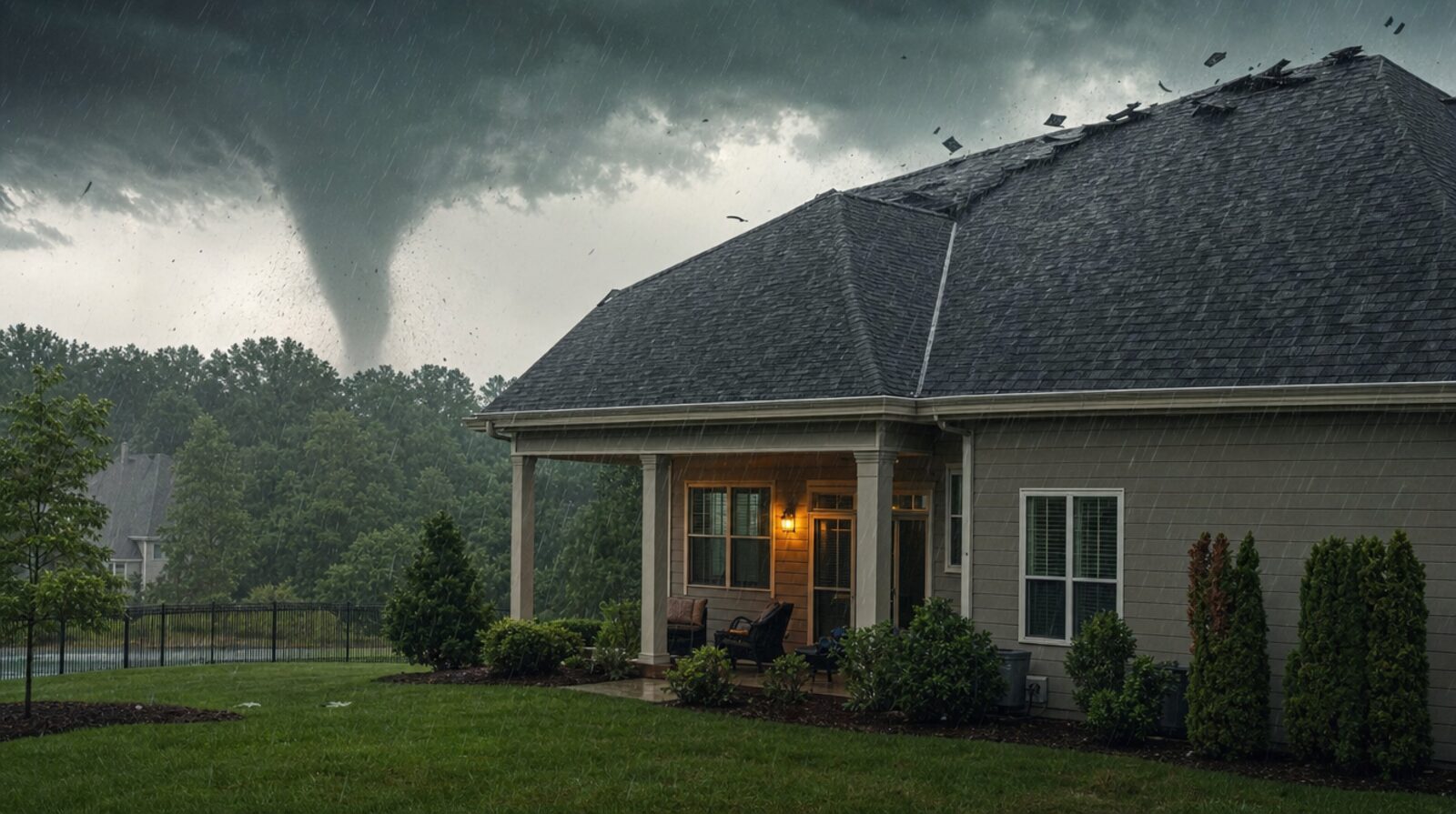
Why Tornado Season Catches Triad Homeowners Off Guard
Most homeowners in Greensboro, High Point, and Winston-Salem think of tornadoes as a "somewhere else" problem — Oklahoma, Kansas, the Deep South. But North Carolina sits well within tornado territory, and our season typically runs from March through June, with a second smaller bump in the fall. These aren't always the mile-wide monsters you see on the news. Piedmont tornadoes are frequently spawned by fast-moving squall lines and embedded supercells that arrive with little warning, often at night, and touch down for a mile or two before lifting. Short duration doesn't mean low damage. A roof only needs a few seconds of extreme uplift and wind-driven debris to fail.
After climbing more roofs than we can count following spring storms, we've noticed the damage homeowners overlook is rarely the dramatic stuff. It's the small, boring details that decide whether a roof survives a tornado's outer wind field or ends up as a tarp job.
The Roof Risks Nobody Thinks to Check
Ridge Cap and Hip Shingles
Ridge caps take the highest wind loads on the entire roof because they sit at the peak, where wind accelerates and pulls upward instead of pushing down. If ridge cap shingles were nailed instead of properly sealed, or if the sealant strip has aged out, they're often the first thing to peel back in straight-line winds ahead of a tornado's core. Walk your yard after any severe storm and look up at the ridge line — gaps or missing cap pieces are an early warning sign, even if the rest of the roof looks fine from the ground.
Rake and Gable Edges
Homes with gable ends (the triangular wall section under a peaked roof) are especially vulnerable during tornado-strength gusts. Wind hits the flat gable wall like a sail, and if the roof decking isn't well fastened along that rake edge, the whole edge can peel upward. Older homes built before more current wind-resistance standards became common are more likely to have this weakness, since bracing requirements have tightened over the decades.
Soffit and Fascia Ventilation
This is the one almost nobody checks. Once wind gets up under a soffit panel or through a gap in the fascia, it pressurizes the attic from below — and a pressurized attic pushes outward on the roof deck from the inside. We've seen roofs that looked structurally fine on top fail because the soffit blew in first. Loose, cracked, or improperly fastened soffit panels should be repaired before storm season, not after.
Flashing Around Penetrations
Chimneys, plumbing vents, and skylights all interrupt the roof plane, and flashing is what keeps water and wind out of those seams. Flashing doesn't need a tornado to fail — years of thermal expansion and contraction loosen nails and crack sealant. In a severe wind event, a loose flashing edge becomes a lever that wind can grab and use to peel back surrounding shingles.
Loose or Aging Shingle Tabs
Shingles rely on a factory-applied adhesive strip (called the seal strip) that bonds to the shingle below it when warmed by the sun. If a roof went through a cold winter without a warm stretch to reactivate that bond, or if the shingles are simply past their effective service life, individual tabs can lift under wind loads well below what the shingle was rated for when new. A quick way to check: gently lift a shingle tab in an inconspicuous area. If it lifts with almost no resistance, the seal has failed.
A Pre-Season Roof Checklist
- Walk the perimeter. From the ground, look for shingles that appear discolored, curled, or out of alignment compared to the rest of the field.
- Check the attic. Daylight coming through the roof deck, water stains on the underside of the sheathing, or damp insulation all point to existing vulnerabilities that wind will exploit.
- Clear the gutters. Clogged gutters trap water against the fascia and roof edge, softening the wood that your shingles and flashing are fastened to.
- Trim overhanging limbs. Branches within striking distance of the roof are one of the most common causes of storm-related punctures, even in weaker straight-line winds well outside the tornado's direct path.
- Secure loose items in the yard. Patio furniture, trampolines, and grills become airborne debris that can damage a perfectly sound roof.
- Photograph your roof now. Clear photos taken before storm season make it much easier to document any changes if you need to file an insurance claim later.
What To Do After a Tornado Warning Passes
Once the storm clears, resist the urge to get on the roof yourself, especially if there's any visible damage, downed power lines nearby, or the deck feels soft underfoot from the ground-level view. Instead:
- Look for granules collecting in gutters or at downspout outlets — a sign of shingle surface damage.
- Check ceilings and upper-floor closets for new water stains, which often show up hours or even a day or two after the storm.
- Note any siding, gutter, or fence damage nearby. Neighboring damage is a good indicator that your roof took a hit too, even if it isn't obvious yet.
- Call a local contractor for a proper inspection rather than assuming "no leak yet" means "no damage." Wind damage can loosen a roof system without an immediate leak, and that hidden vulnerability often shows up during the next heavy rain.
A roof that survives a tornado's outer bands usually does so because of a dozen small things done right — proper nailing, sealed seams, clear vents, healthy shingles — not because of any single heroic feature.
Tornado season in the Piedmont doesn't get the national attention that hurricane season does, but the roofs we repair every spring tell a consistent story: the damage almost always starts at an edge, a seam, or a vent nobody thought to check. A little attention before the season ramps up goes a long way toward keeping your home dry and your family safe.
Stop Guessing on Price
Get precise measurements and a detailed price range for your specific roof right now using our AI technology. No home visit required.
Get my price