 Back to Guides
Standing Seam Metal Roofs: A Field Guide for NC Homeowners


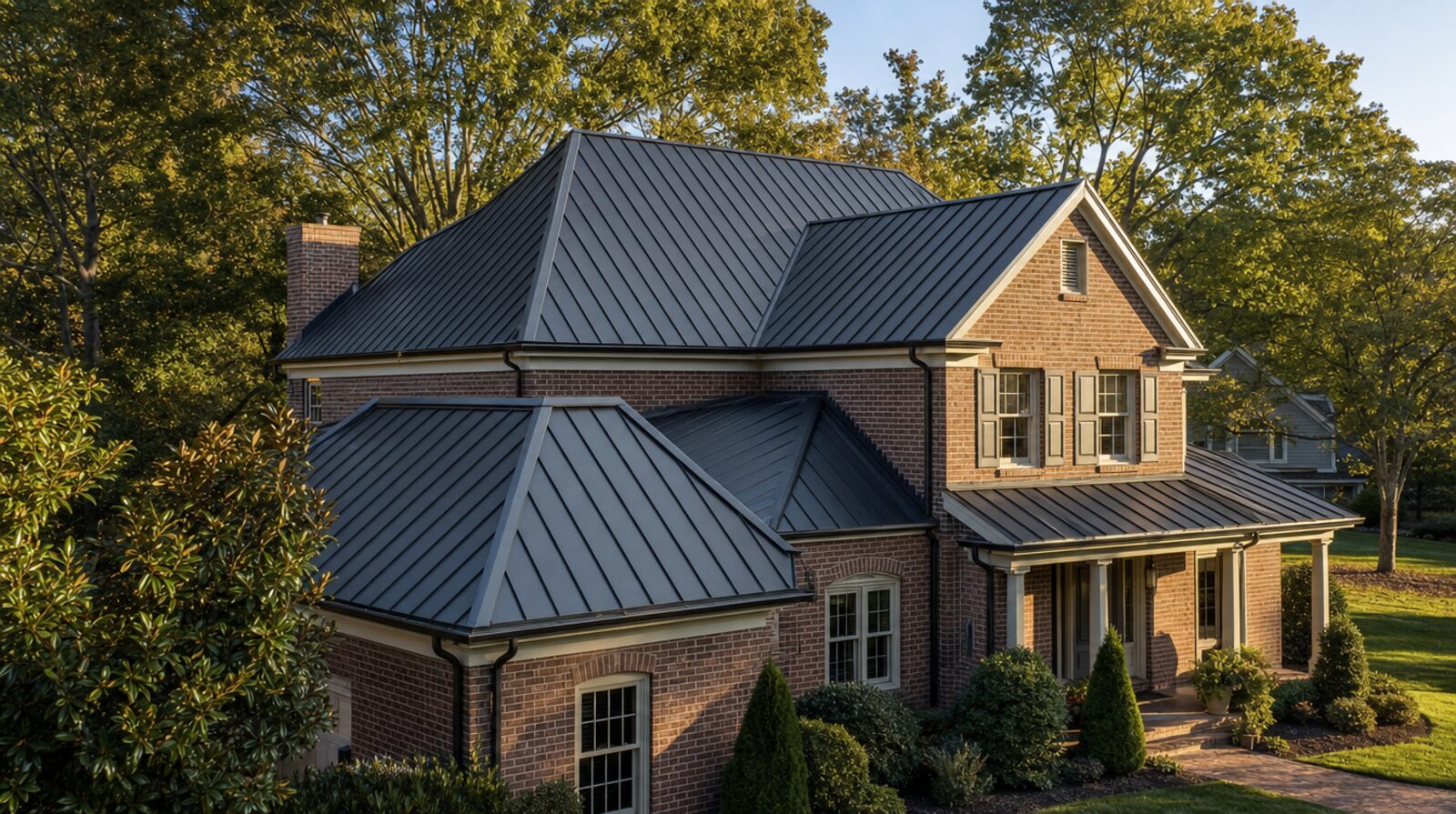
Every summer we get a wave of calls that start the same way: "My neighbor put on a metal roof and it looks incredible — what would that cost me?" More often than not, what they're picturing is standing seam metal, the roofing system with the clean vertical panels and hidden fasteners that's become the look homeowners in Greensboro, High Point, and Winston-Salem want on everything from farmhouse remodels to modern builds downtown. It's a good roof. It's also not the roof for every house or every budget, and we'd rather walk you through the real tradeoffs than just tell you what you want to hear.
What Standing Seam Actually Is
Standing seam is a metal panel system where the seams between panels are raised and interlocked (or mechanically seamed) rather than exposed with visible screws running down the face of the panel. The fasteners are hidden under the seam, which is the main reason this style outperforms exposed-fastener metal panels over time — there's no screw head sitting on top of the roof for water to work its way around as rubber washers age and shrink.
Panels typically run 12 to 24 inches wide and are formed in continuous lengths that can run the full slope of your roof in one piece, eave to ridge, with no horizontal seams to worry about. Most residential jobs in our area use 24-gauge or 26-gauge steel, though aluminum is worth considering if you're near the coast or dealing with well water runoff that can be hard on ferrous metals.
Panel Profiles You'll See Quoted
- Snap-lock panels — panels click together without field seaming; faster installation, slightly lower cost, still a very durable residential option.
- Mechanically seamed panels — a roving seamer machine crimps the seam on-site to 90 or 180 degrees; tighter weather seal, typically specified on lower-slope sections or in higher-wind-exposure situations.
- Batten seam — a raised cap covers the seam; more of an architectural, high-end look, priced accordingly.
How It Performs on a Piedmont Triad Roof
Our climate is really the whole argument for standing seam, if you're weighing it against asphalt. We get hard summer thunderstorms with wind-driven rain, occasional hail, humid stretches that punish organic roofing materials, and enough freeze-thaw cycling in January and February to open up weak seams over the years. Standing seam handles all of that differently than shingles do:
- Water shedding — the raised seams sit above the water plane, so even on lower slopes (down to about 3:12 with the right underlayment) water isn't sitting against a fastener or a butt joint the way it can on shingles.
- Wind performance — the concealed clip attachment system distributes uplift forces across the panel and the deck rather than concentrating it at exposed nail heads, which is why metal roofs are generally the last thing standing after a rough thunderstorm season.
- Hail — steel panels can dent under large hail; it's mostly cosmetic on a structural level, but if you're particular about how your roof looks from the ground, ask about the gauge and any textured or granular-coated finish options that hide minor denting better than a smooth panel.
- Heat — a reflective finish can noticeably reduce attic heat gain compared to dark asphalt shingles, which matters when your HVAC is fighting a July afternoon in the Triad.
Cost, Lifespan, and the Math Homeowners Actually Care About
We'll be straight with you: standing seam costs more upfront than asphalt shingles, generally landing somewhere in the range of two to four times a comparable shingle job depending on panel profile, metal gauge, roof complexity, and how many valleys, dormers, and penetrations we're cutting panels around. Complex rooflines cost more in metal than in shingles because every cut and custom flashing detail takes more labor.
Where the math changes is lifespan and upkeep. A well-installed standing seam roof commonly lasts several decades longer than asphalt, and you're not budgeting for a full tear-off and replacement every 20 to 25 years the way you might with shingles. Ask your contractor about the specific paint finish warranty and the manufacturer's coverage on the panel material itself — those terms vary a lot between finish systems, so get it in writing rather than assuming.
The Noise Question
This is one of the most common myths we hear, usually from someone whose only reference point is a metal-roofed barn or shed with open framing underneath. On a properly installed residential standing seam roof — with solid decking, underlayment, and often rigid insulation or a sound-dampening layer between the deck and panels — rain noise is not dramatically different from a shingle roof. If it were, we'd be swapping half the roofs in this business back.
Questions Worth Asking Before You Sign a Contract
- What gauge and finish system are you quoting? Gauge affects dent resistance; finish (like a Kynar-type PVDF coating versus a basic polyester) affects fade and chalk resistance over the decades.
- Snap-lock or mechanically seamed? Make sure the profile matches your roof's slope and complexity, not just the lowest bid.
- How are you flashing valleys, chimneys, and penetrations? Metal roof failures are almost always at the details, not the field panels.
- Is the crew running the panels on-site or shop-fabricating them? On-site roll-forming can mean fewer seams and better fit on longer runs.
- What does the paint finish warranty actually cover — fade, chalk, chip — and for how long, in writing?
Standing seam isn't the right call for every roof or every budget, and we'll tell you that plainly if your situation calls for a different material. But for homeowners planning to stay put and wanting a roof they genuinely won't think about again for a long time, it's one of the best-performing options available for this climate.
Stop Guessing on Price
Get precise measurements and a detailed price range for your specific roof right now using our AI technology. No home visit required.
Get my price