 Back to Guides
Spring 2026 Roofing Trends: What Piedmont Triad Homeowners Are Choosing


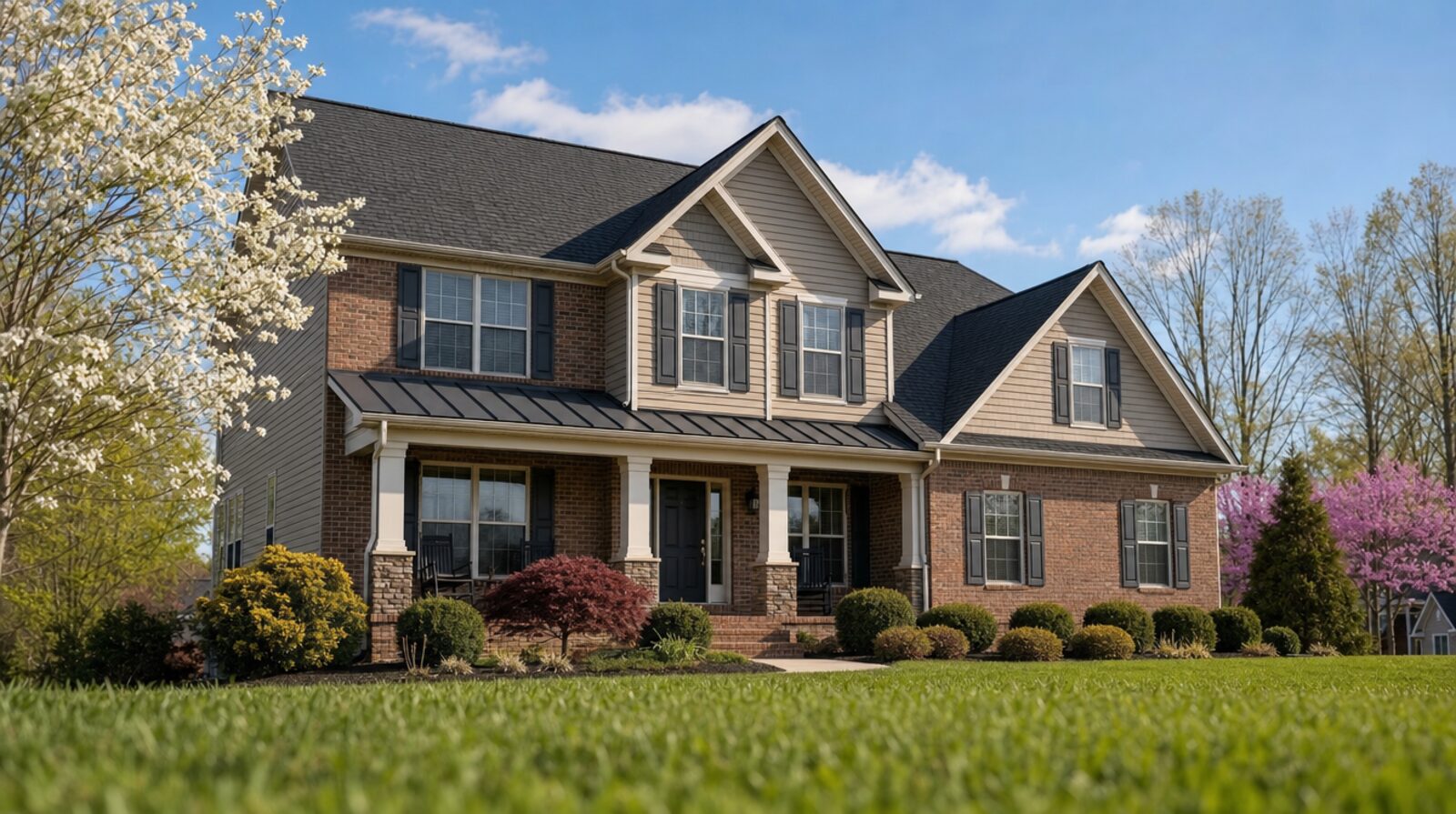
Spring Is When Triad Roofs Show Their Hand
Every March, we start fielding the same wave of calls. Winter finally lets go, homeowners walk their yard with a cup of coffee, look up, and notice things they couldn't see in December: curled shingle edges, a streak of algae down the north slope, granules piling up in the gutter like coarse sand. Spring is the season Piedmont Triad roofs get inspected, whether by a contractor or by a homeowner squinting from the driveway. That timing shapes what people end up choosing when a repair turns into a replacement conversation.
This year we're seeing a few clear patterns in what Greensboro, High Point, and Winston-Salem homeowners are asking for. None of it is exotic — it's practical stuff driven by our specific climate: humid summers, ice in January, thunderstorms that can bring hail out of nowhere in April and May, and a housing stock that's a real mix of 1960s ranches, 90s subdivisions, and new construction.
Impact-Resistant Shingles Are the Top Ask
The single biggest shift we've noticed is homeowners specifically asking about impact-resistant (Class 4) shingle options before we even bring it up. Spring hail is a real risk in this part of North Carolina, and a Class 4 shingle uses a reinforced, polymer-modified asphalt mat that resists cracking and bruising far better than a standard three-tab or builder-grade architectural shingle.
A few things worth knowing if you're weighing this option:
- They cost more upfront — typically a noticeable percentage above standard architectural shingles — but many homeowners see that offset over time through fewer storm-related repairs.
- Check with your insurance carrier directly. Some insurers offer premium discounts for Class 4 roofing, but the discount amount and eligibility varies by carrier and policy, so don't assume a number — ask.
- They still need proper installation. An impact-resistant shingle installed with poor nailing patterns or inadequate underlayment performs like any poorly installed roof. The material upgrade doesn't replace good workmanship.
Color and Material Choices Are Getting More Deliberate
We're also seeing homeowners spend more time on color selection than they used to. It used to be a five-minute decision at the end of a sales conversation. Now people are pulling up photos of neighbors' houses, checking HOA guidelines twice, and asking about how a color will look in ten years, not just on install day.
What's trending on Triad rooflines this spring
- Weathered wood and driftwood tones remain the most requested — they hide dirt and streaking well and pair with the brick and vinyl combinations common in Guilford, Forsyth, and Randolph county subdivisions.
- Charcoal and slate blends are gaining ground, especially on newer builds with white or gray trim, though we always remind homeowners that darker roofs run hotter in July and August attic temperatures.
- Dimensional (architectural) shingles have essentially replaced three-tab as the default choice for anyone re-roofing — the layered look and improved wind performance make the modest price difference an easy call for most homeowners.
On the metal side, standing-seam accent roofs — over a porch, dormer, or bay window — continue to show up as a way to add curb appeal without committing to a full metal roof replacement. It's a smaller investment that changes the whole look of a front elevation.
Ventilation and Attic Health Are Finally Getting Attention
Maybe the most encouraging trend we've noticed: homeowners are asking better questions about attic ventilation instead of treating a roof as just the shingles on top. Poor ventilation is one of the most common issues we find on Triad roofs during spring inspections, and it's often invisible until it causes a problem — premature shingle aging from trapped heat, or moisture buildup that leads to mold and wood rot on the underside of the decking.
A balanced system needs both intake (typically soffit vents) and exhaust (ridge vents, box vents, or power vents) working together. If your home only has one or the other, air isn't actually flowing — it's just sitting there. Signs worth checking this spring:
- Look at your soffits. If they're painted shut, blocked by insulation, or missing vents entirely, your attic likely isn't getting fresh air intake.
- Check your energy bills against last spring. A sudden jump in cooling costs can sometimes trace back to attic heat buildup rather than an HVAC problem.
- Look for uneven snow melt or frost patterns on the roof after a cold snap — patchy melting can indicate heat escaping unevenly from the attic below.
- Get into the attic itself if it's accessible, and look for dark staining on the underside of the decking or a musty smell, both of which point to moisture problems.
A roof that looks fine from the street can still be aging fast underneath if the attic behind it isn't breathing right.
What This Means If You're Planning Work This Season
If you're weighing a repair versus a full replacement this spring, our advice hasn't changed much even as materials have: get an honest look at what's actually happening under the surface — the decking, the ventilation, the flashing around chimneys and valleys — before deciding on shingle color or brand. The trends above are worth knowing, but the fundamentals of a roof that lasts through Piedmont Triad weather are still the same ones we've always leaned on: solid decking, balanced ventilation, careful flashing work, and a shingle matched to how much sun and storm exposure your particular roof actually sees.
Stop Guessing on Price
Get precise measurements and a detailed price range for your specific roof right now using our AI technology. No home visit required.
Get my price