 Back to Guides
Solar Panels and Your Roof: What to Know Before You Install


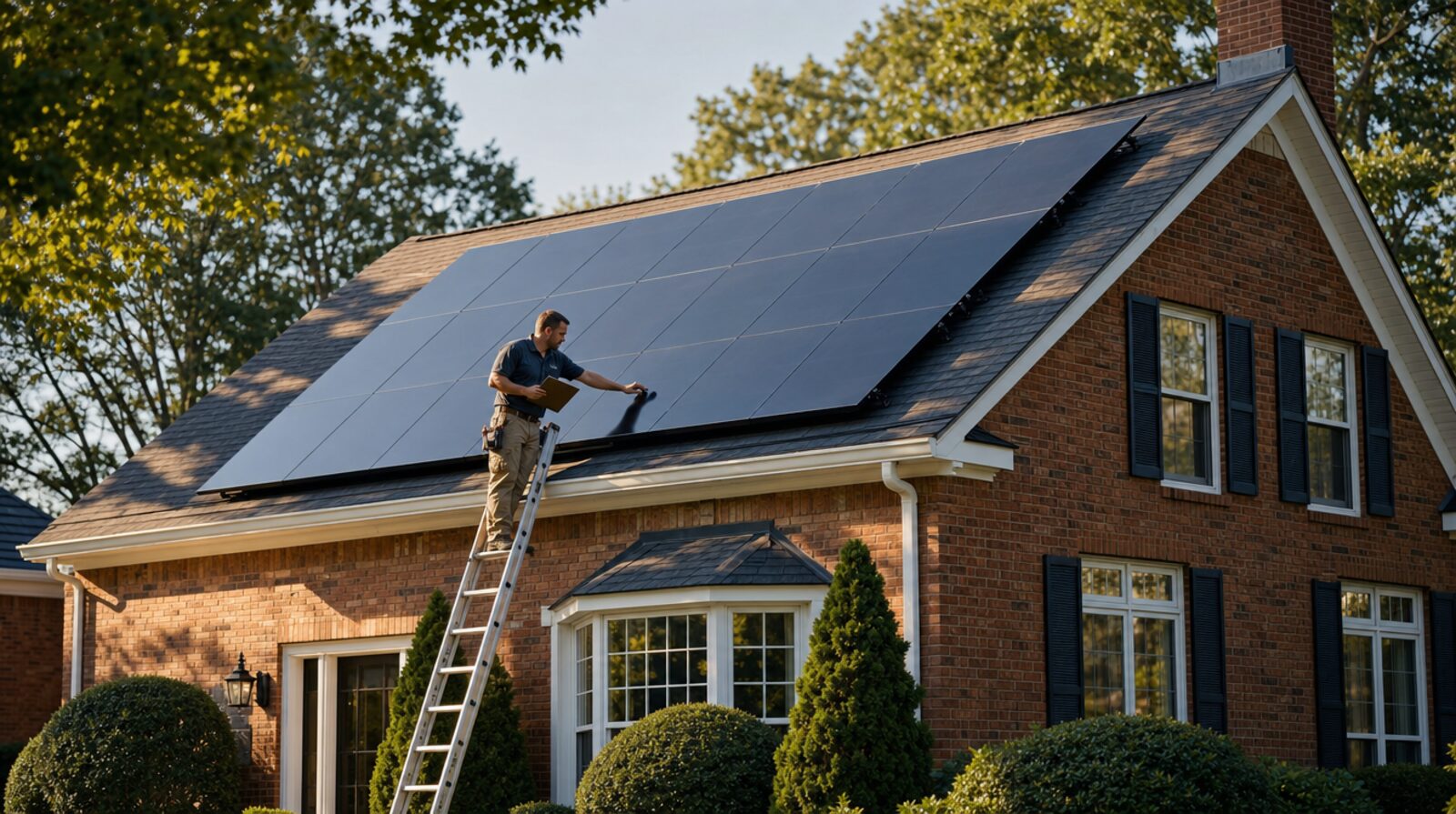
Solar is showing up on more rooftops across Greensboro, High Point, and Winston-Salem every year, and it's a good conversation to have with your roofer before you have it with a solar installer. Panels can add 20-30 years of extra demand on a roof that was never designed with them in mind, and the order you do things in matters more than most homeowners realize. Here's what we tell customers who call us before they call a solar company.
Check the Roof First, Not After
The single biggest mistake we see is a homeowner getting solar panels installed on a roof that has 5-10 years of life left in it. Solar panel systems typically carry 20-25 year warranties, and most installers won't remove and reinstall panels for a roof replacement without charging a significant fee, sometimes running into the thousands of dollars. If your shingles are already showing granule loss, curling edges, or you're past the two-thirds mark of their expected lifespan, replace the roof first.
A few things worth checking before you sign a solar contract:
- Shingle age and condition. Walk your roofline and look for curling, cracking, or bald spots where granules have worn away. If a roofer would recommend replacement within the next several years, do it before solar goes up.
- Decking integrity. Panels and their mounting hardware add weight and concentrated stress points. Soft spots, sagging, or visible water staining in the attic are signs the decking underneath needs attention first.
- Flashing and penetrations. Every existing pipe boot, vent, and chimney flashing is a place water can already be finding its way in. Solar adds more penetrations to that list, so start from a roof that's already sealed correctly.
Ask any solar company for their mounting and flashing method in writing, and consider having your roofing contractor review it before installation starts. A rushed or improperly flashed mount is one of the most common causes of solar-related roof leaks we get called out for.
How Mounting Actually Works — and Where Leaks Start
Most residential solar arrays in our area use a rail-mounted system attached through the shingles into the rafters or trusses below, using lag bolts and flashed mounting feet. Done correctly, each mounting point gets a flashing that slides under the course of shingles above it, directing water around the penetration rather than letting it pool at the bolt. Done poorly — surface-sealed with caulk instead of properly flashed — it's only a matter of time before that seal fails and water finds the plywood underneath.
A few technical points worth understanding:
- Rafter attachment matters. Mounting feet should hit structural framing, not just decking. An installer using a stud finder or referencing your attic framing layout is doing it right; one guessing at spacing is not.
- Standoff height affects airflow. Panels mounted 4-6 inches off the roof surface allow airflow underneath, which helps both panel efficiency and keeps moisture from being trapped against the shingles.
- Wire runs need their own penetrations sealed. Conduit and cable entry points into the attic are just as important to flash correctly as the mounting feet themselves.
If you already have panels installed and notice a water stain on a ceiling below the array, don't wait — trace it back to a mounting point or penetration before it spreads to framing and insulation.
What This Means for Roof Maintenance and Repairs Going Forward
Once panels are up, a few things change about how you maintain the roof underneath and around them.
- Debris collects under and around arrays. Leaves and pine straw can build up along the lower edge of a panel row, holding moisture against the shingles. Check this a couple of times a year, especially after fall leaf drop.
- Repairs get more complicated. A roofer working around an active solar array has to work carefully near live electrical connections and mounting hardware. Make sure whoever repairs your roof down the road knows how to safely detach and reset panels, or coordinate with your solar company for that portion of the work.
- Warranty coordination is your job. Keep your roofing warranty paperwork and your solar installation paperwork together. If a leak develops, you'll want documentation on hand showing when panels went up and what flashing method was used, so it's clear whether the issue traces back to the roofing material or the solar installation.
None of this is a reason to avoid solar — it's simply a reason to sequence the work correctly and ask the right questions up front. A roof in good condition, properly flashed mounting hardware, and a little seasonal attention underneath the array will let a solar system and a roof live together for decades without conflict. If you're not sure where your roof stands before a solar company shows up with a contract, that's exactly the kind of walk-the-roof conversation worth having with a local roofer first.
Stop Guessing on Price
Get precise measurements and a detailed price range for your specific roof right now using our AI technology. No home visit required.
Get my price