 Back to Guides
Roofing Scams After a Storm: How to Spot a Storm-Chaser Contractor


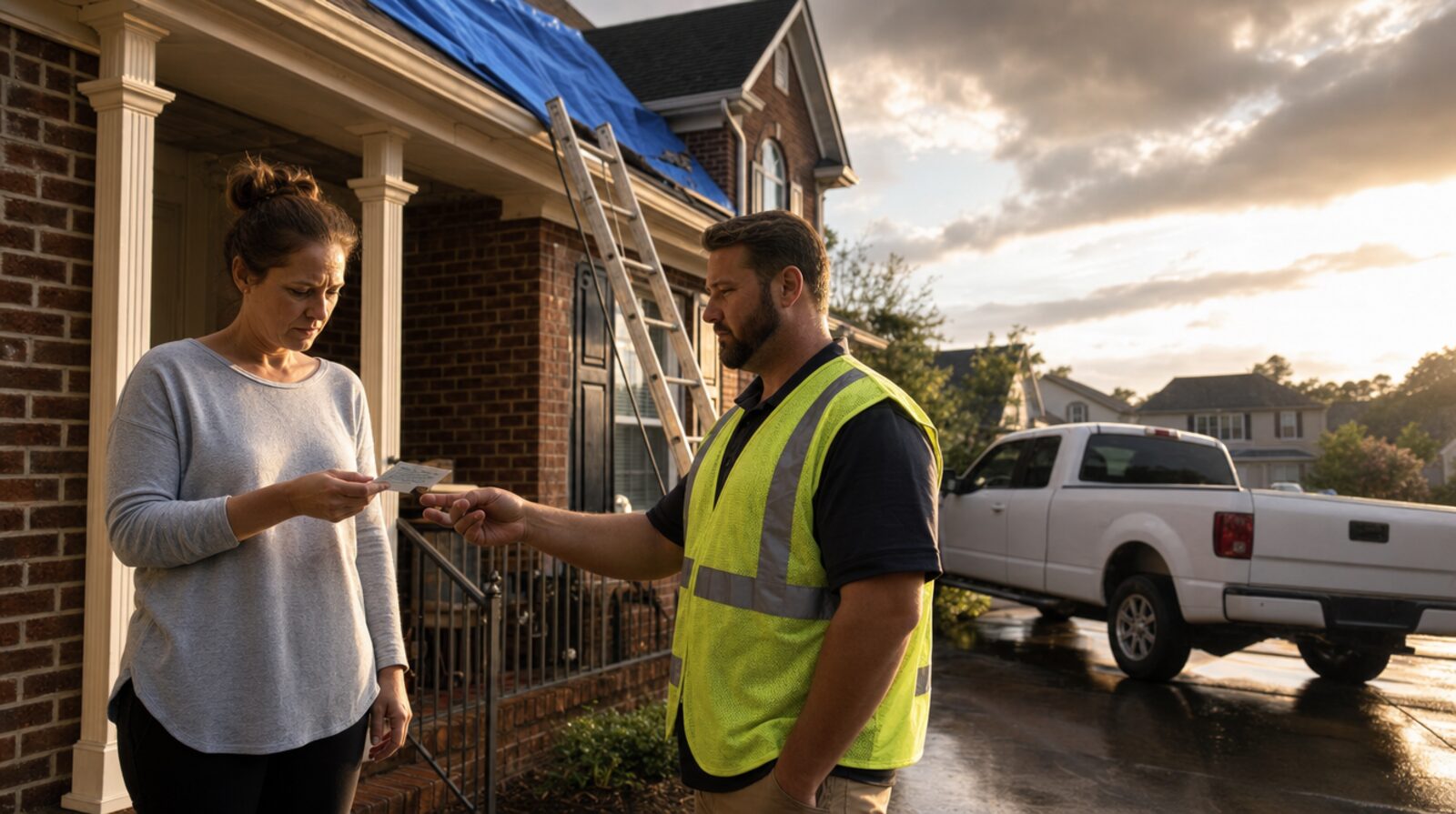
Every time a hailstorm or a line of severe thunderstorms moves through Greensboro, High Point, or Winston-Salem, the same thing happens within 48 hours: pickup trucks with magnetic door signs start rolling through the neighborhood. Someone knocks on your door, points up at your roof, and tells you they "noticed damage" while working on your neighbor's house. They offer a free inspection right now, and if you sign today, they'll waive your deductible.
That knock is almost never a coincidence, and it's rarely good news for you. We've spent decades repairing storm damage in this area, and we've also spent a fair amount of time repairing the damage storm-chasing contractors leave behind — bad tarps, mismatched shingles, and homeowners stuck fighting an insurance company over a claim that was mishandled from the start. Here's what to watch for.
Why Storm Chasers Show Up After Every Storm
Storm-chasing crews follow severe weather across the country, working a town hard for a few weeks and then moving on before the warranty on their work is ever tested. They aren't necessarily unlicensed, but they typically have no real presence in the Piedmont Triad — no local address you can drive to, no history with local building inspectors, and no reason to still be answering your calls next spring when a repair fails.
The tell-tale signs are usually easy to spot once you know to look for them:
- The unsolicited door knock. A contractor who "just happened to notice" damage from the ground, before you called anyone, should raise an eyebrow. Hail and wind damage is often subtle enough that it takes someone on the roof with experience to confirm it.
- Out-of-state or out-of-town plates and phone numbers. Ask where the company is based. A legitimate local contractor will have a physical address in or near the Triad, not just a P.O. box or a number that stops working in the fall.
- Pressure to sign a contract on the spot. Legitimate roofers want to inspect, document, and give you a real quote — not corner you into a signature before you've talked to your insurance company.
- "We'll waive your deductible." This is a red flag, not a perk. Deductible waivers are against your insurance policy terms in most cases and can be considered insurance fraud, which puts homeowners at legal risk, not just the contractor.
- Requests for large upfront payment before any material has been ordered or work has started. A modest deposit tied to material costs is normal; being asked to pay most or all of the job before a shingle is delivered is not.
- No local references or completed jobs you can drive by. Ask for addresses of roofs they've completed in your county in the past year. A real local contractor can give you several without hesitating.
What a Legitimate Post-Storm Inspection Looks Like
If your roof actually was hit — and after a serious hail event, plenty of roofs in the Triad are — a proper inspection should be methodical, not rushed. A trustworthy contractor will:
- Walk the entire roof, not just the side visible from the street, checking for bruising on shingles, granule loss, and soft spots in the decking.
- Check soft metals first — gutters, flashing, vent caps, and downspouts often show hail bruising more clearly than shingles and are a good early indicator of storm impact.
- Take dated, close-up photos of any damage they find, ideally with a marker or chalk circle so you can see it yourself, not just take their word for it.
- Explain the difference between cosmetic damage and functional damage, since not every mark on a shingle affects how the roof performs.
- Give you a written estimate you can keep, not just a verbal number, and be willing to answer questions about scope, materials, and timeline without pressure.
If you're not sure whether your roof was actually affected by a recent storm, it's worth getting a second opinion before committing to anyone — especially before filing a claim, since claims can affect future premiums even when the payout is small.
Protecting Yourself Before You Sign Anything
A few habits will keep you out of trouble regardless of who ends up on your roof:
- Verify licensing and insurance directly. North Carolina requires a license for roofing work above a certain dollar threshold. Ask for the contractor's license number and call to confirm it's active rather than taking a business card at face value.
- Call your insurance company yourself. Don't let a contractor "handle" the claim process entirely on your behalf or speak to your adjuster without you present. You're the policyholder, and you should stay in the loop on every conversation.
- Get everything in writing. Scope of work, materials, timeline, payment schedule, and warranty coverage should all be spelled out in the contract, not promised verbally and left out of the paperwork.
- Ask about warranty coverage explicitly. Ask what's covered, for how long, and whether it covers labor as well as materials — then ask how you'd reach them if a problem showed up next year.
- Take your time on the decision, even if you can't take your time on the tarp. If a roof needs emergency tarping to prevent interior water damage, that's urgent. Choosing who does the permanent repair is a decision worth a day or two of research.
If a contractor's pitch depends on you deciding right now, before you've called your insurance company or checked a single reference, that urgency is the strategy — not a courtesy.
Storms are going to keep coming through the Triad every spring and summer, and most of the contractors who show up afterward are honest people doing honest work. But it only takes one bad contract to turn a hailstorm into a much longer headache. Slow down, ask the direct questions above, and choose someone who'll still be a phone call away long after the trucks with the magnetic signs have moved on to the next town.
Stop Guessing on Price
Get precise measurements and a detailed price range for your specific roof right now using our AI technology. No home visit required.
Get my price