 Back to Guides
R-Value and Your Roof: A Homeowner's Guide to Attic Insulation


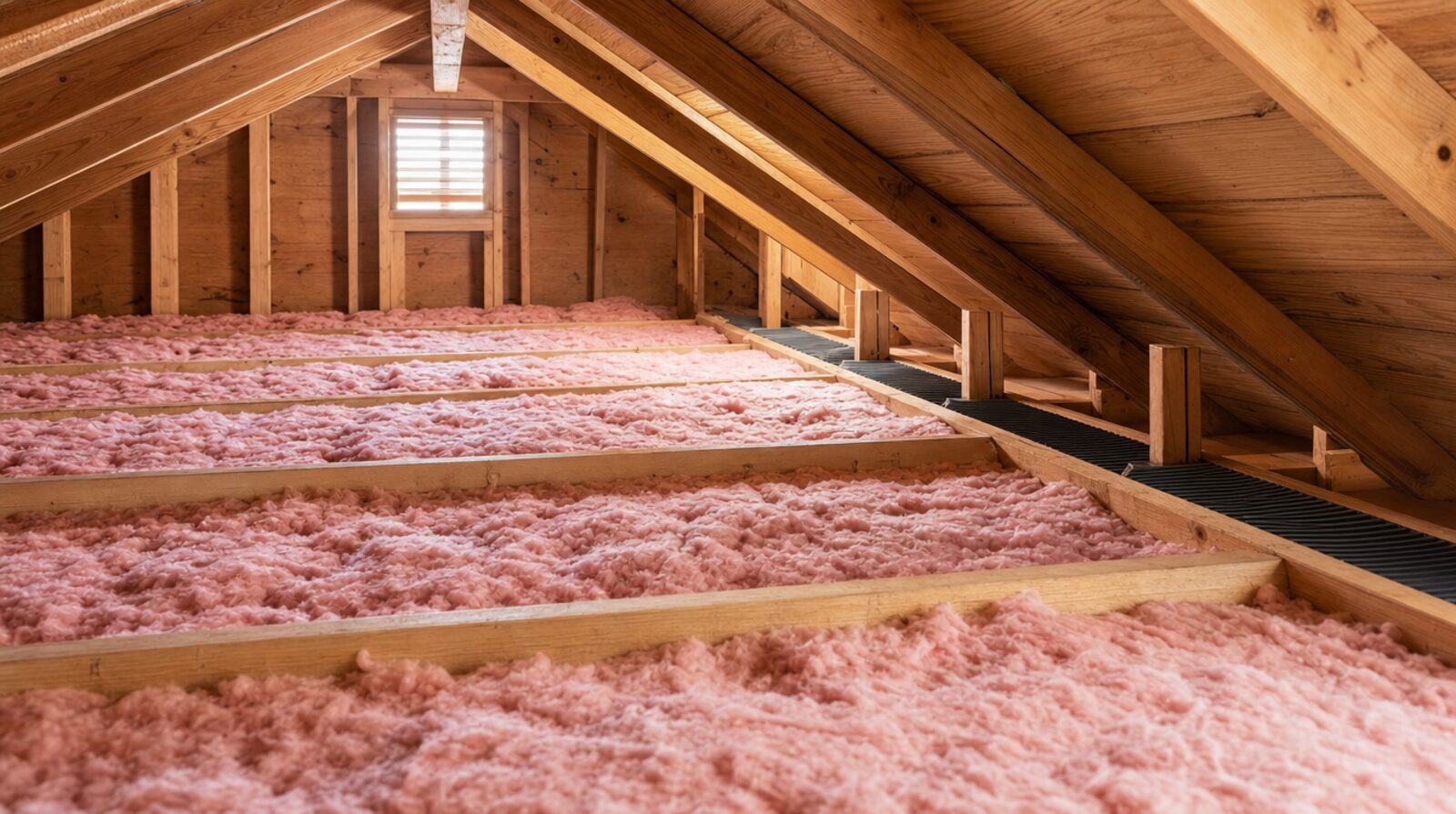
Every winter and summer we get the same call: "My energy bill doubled and I don't know why." Nine times out of ten, when we get up in the attic, the answer is staring right back at us — insulation that's thin, compressed, or just plain missing in the spots that matter most. R-value gets thrown around a lot in ads and on insulation bags, but most homeowners never get a straight answer about what it actually means for their house. Let's fix that.
What R-Value Actually Measures
R-value is a measurement of resistance to heat flow. The higher the number, the better the material resists heat moving through it — whether that's summer heat trying to work its way down into your living space, or winter warmth trying to escape up through your ceiling. It's not a measure of how "thick" or "fluffy" insulation feels, and it's not a guarantee of performance if the material has been compressed, gotten wet, or has gaps in coverage.
For our climate zone here in the Piedmont — Greensboro, High Point, Winston-Salem, and the surrounding area — the Department of Energy's general guidance for attic insulation lands in the R-38 to R-49 range for most homes, depending on your existing insulation type and how your attic is framed. Older homes in established neighborhoods around the Triad were often built to a much lower standard, sometimes R-19 or less, because that was simply the norm decades ago. If your house was built before the 1990s and hasn't had insulation upgraded since, there's a good chance you're running well under current recommendations.
Here's the part most people don't realize: R-value is cumulative but not infinite in its usefulness. Doubling your insulation depth doesn't double your energy savings — you get diminishing returns past a certain point, especially if air leaks and ventilation problems are left unaddressed. We've climbed into attics with R-49 worth of insulation sitting on top of a ceiling full of unsealed can lights and gaps around the attic hatch, and the homeowner was still losing conditioned air like a sieve. Insulation stops conductive heat transfer; it does nothing for air that's just leaking straight through a hole.
Signs Your Attic Insulation Is Underperforming
You don't need to go up there with a tape measure to get a sense of whether your attic is doing its job. Watch for these:
- Ice dams or icicles along the eaves in winter. This usually means heat is escaping into the attic, warming the roof deck, and melting snow that refreezes at the colder overhang.
- Uneven room temperatures — upstairs bedrooms that run hot in summer and cold in winter compared to the rest of the house.
- Visible daylight or drafts around the attic hatch or pull-down stairs. These are notorious weak points even in otherwise well-insulated homes.
- Insulation that looks patchy, thin, or matted down when you peek up through the attic access. Loose-fill insulation settles over time and loses effective R-value.
- Higher-than-expected heating and cooling bills compared to similarly sized homes in your neighborhood.
If you can see the tops of your ceiling joists poking up through the insulation, that's a quick visual cue you're under-insulated — properly installed material should cover the joists completely and sit level across the attic floor.
Insulation and Ventilation Work Together, Not Against Each Other
This is where we see the most confusion, and it's worth being direct about it: piling on more insulation without addressing attic ventilation can actually create problems. Your roof system needs airflow — intake at the soffits, exhaust at the ridge or through gable vents — to carry moisture and heat out of the attic space. When insulation gets pushed too far toward the eaves and blocks that soffit intake, you choke off airflow, and now you've got a hot, humid attic that can lead to premature shingle aging from underneath and, in worse cases, moisture issues in the roof deck itself.
Baffles — sometimes called rafter vents — are the simple fix. They're rigid channels installed between the rafters at the eaves that hold a clear air path open even when insulation is packed in tight against them. Any time we're addressing attic insulation on a Triad home, we check that baffles are in place and unobstructed before adding more material on top of what's there.
A properly balanced attic also needs the vapor barrier oriented correctly — facing the conditioned living space below, not the attic itself — to keep humid indoor air from condensing inside the insulation during our cold snaps. Get this backwards and you can trap moisture right where you don't want it.
What to Ask Before You Add Insulation
If you're getting attic work done, whether it's a top-off of existing insulation or a full replacement, a few questions will tell you a lot about the quality of the plan:
- What's the current R-value, and what's the target after the work is done?
- Will air sealing happen before new insulation goes in? Sealing gaps around plumbing stacks, electrical penetrations, and the attic hatch should always come first — insulation on top of leaks just hides the problem.
- Are soffit vents being checked and baffles installed or confirmed clear?
- Is the insulation type (batt, loose-fill cellulose, or blown fiberglass) appropriate for your attic's framing and existing conditions?
Attic insulation isn't the most exciting home improvement project, but it's one of the few where the return shows up every single month on your utility bill, and it protects the roof deck above it from the inside out. Since your attic and your roof share the same airspace, we always keep an eye on insulation and ventilation whenever we're up there for a roofing inspection — the two systems are more connected than most homeowners realize.
Stop Guessing on Price
Get precise measurements and a detailed price range for your specific roof right now using our AI technology. No home visit required.
Get my price