 Back to Guides
Ice Dams in the Piedmont Triad: Rare, But Here's What to Do


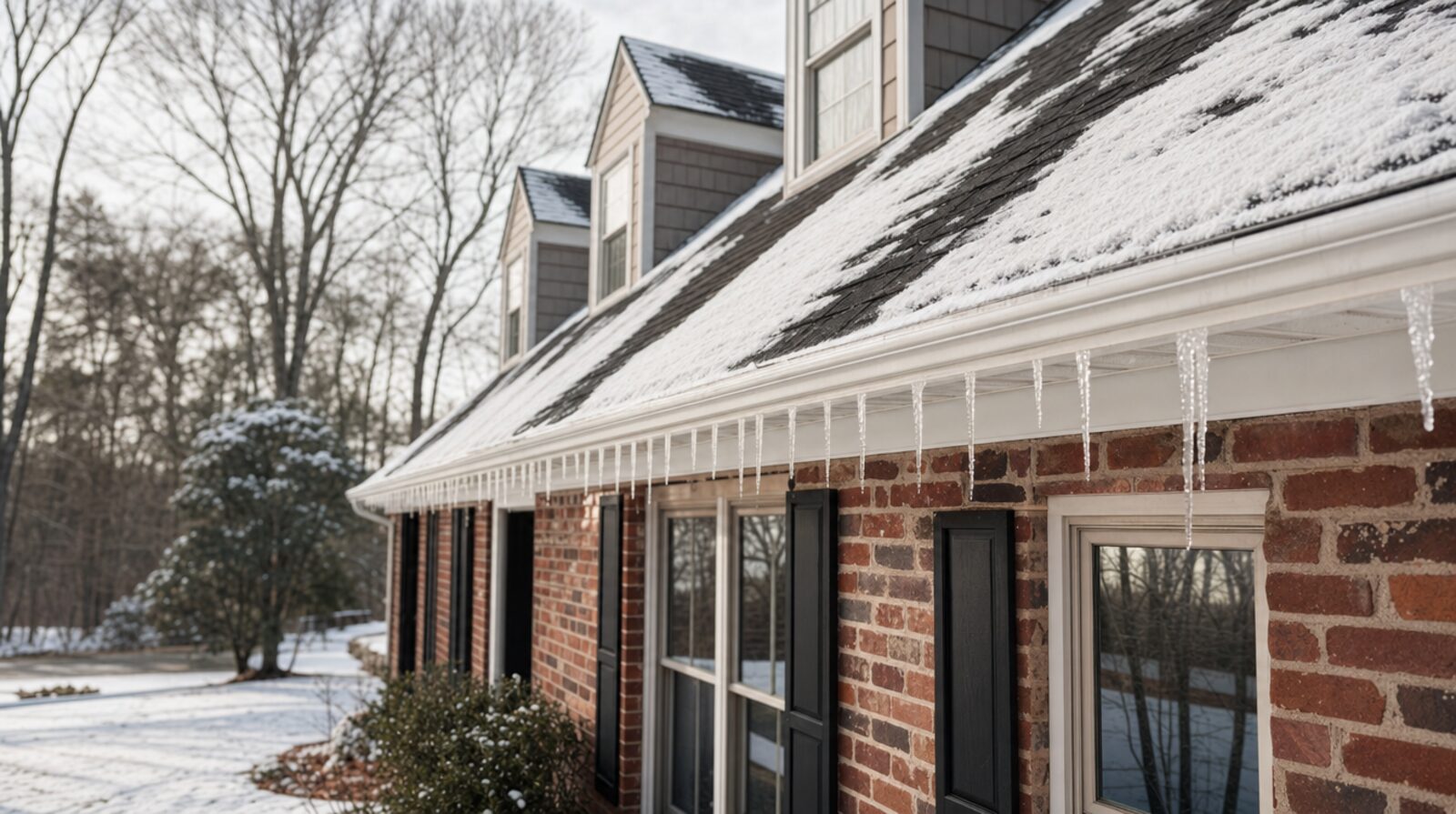
Every few winters, someone in Greensboro or Winston-Salem calls us worried about "ice dams" after seeing the term on a national morning show or a neighbor's Facebook post. The good news: true ice dams, the kind that plague roofs in Minnesota or upstate New York, are uncommon here in the Piedmont Triad. The not-so-good news: our climate can still produce a scaled-down version of the same problem, and it catches people off guard precisely because they don't expect it in North Carolina.
Why Ice Dams Are Rare Here — But Not Impossible
An ice dam forms when heat escaping from the attic warms the underside of the roof deck enough to melt snow sitting on the upper part of the roof, while the eaves stay cold. That meltwater runs down, hits the colder overhang, and refreezes into a ridge of ice. Once that ridge builds up, more meltwater pools behind it instead of draining off the edge — and pooled water will find its way under shingles, through nail holes, and into your attic insulation.
That cycle needs two ingredients we don't usually get together: a sustained snowpack sitting on the roof for days, and a hard, prolonged freeze. Most Triad snow events melt off within a day or two, often helped along by sun even when air temps stay near freezing. But when a heavier snow lands and then gets locked in by an arctic air mass for several days — which does happen here every few winters — the conditions line up. Homes with steep, well-ventilated roofs rarely see a problem. Homes with additions, dormers, or valleys where snow lingers in shade, especially on the north side, are the ones we get called out to.
What to Watch For
You don't need to climb up and inspect ice formations yourself — in fact, please don't. Here's what you can safely check from the ground or a window:
- Icicles hanging heavy off the gutters after a multi-day cold snap. A few thin icicles are normal. Thick icicles paired with a visible ridge of ice built up on the gutter or lower roof edge is the real warning sign.
- Water stains on interior ceilings near exterior walls, especially under valleys or where a lower roofline meets the house — this shows up a day or two after a freeze-thaw cycle, not during the storm itself.
- Uneven snow melt on the roof — bare patches near the ridge with snow still packed at the eaves is the classic visual sign that attic heat is escaping unevenly.
- Gutters that stay packed with ice well after the rest of the yard has thawed, particularly on the shaded side of the house.
What Actually Causes the Local Version of This Problem
Almost every ice dam case we've handled in this area traces back to attic heat loss, not the storm itself. Common culprits on Triad homes:
- Insufficient attic insulation, especially in additions or homes built before energy codes tightened. Heat pours into the attic and warms the roof deck from below.
- Blocked soffit vents — insulation stuffed too far into the eaves cuts off the intake airflow that's supposed to keep the whole attic (and roof deck) at a uniform, cold temperature.
- Bathroom or kitchen exhaust fans vented into the attic instead of straight outside. This is more common in older homes than people realize, and it dumps warm, moist air right where you don't want it.
- Recessed lighting without proper insulation contact (IC) housings, which lets heat leak up into the attic from the living space below.
In other words, the fix usually isn't about the roof covering itself — it's about keeping your attic cold and well-ventilated so the whole roof deck stays one consistent temperature, eaves included.
What to Do If You Suspect a Dam
If you're seeing the warning signs during or right after a freeze:
- Do not chip or hammer at the ice. This is the single most common cause of self-inflicted shingle damage we see. It's slow, it's dangerous on a ladder in icy conditions, and it almost always cracks or lifts shingles that were otherwise fine.
- A roof rake from the ground can help on single-story sections — pull fresh snow off the lower few feet of roof before it has a chance to melt and refreeze at the eave. Never use a rake on a roof you can't safely reach from solid ground.
- Calcium chloride in a stocking or mesh bag, laid perpendicular across an existing ice dam, can melt a channel through it to let water drain. Skip rock salt — it's harder on shingles, gutters, and the plants below.
- Once the thaw comes, get eyes on your attic. Look for damp insulation, staining on the underside of the roof deck, or daylight where there shouldn't be any. These tell you where heat and moisture got through.
The Real Fix Is a Fall Job, Not a Winter Job
Because the root cause is almost always attic heat and airflow, the best time to address ice dam risk is in October or November, not during the cold snap itself. A quick attic check — insulation depth, clear soffit vents, a functioning ridge vent, exhaust fans that actually terminate outside — solves the problem before it starts and lowers your heating bill in the process. If you had staining or ice buildup this winter, that's worth a proper look at your attic ventilation and insulation before next season, along with a check of the flashing in any valleys where snow tends to linger. A roof that drains and breathes evenly rarely grows an ice dam, even on the handful of nights each winter when the Piedmont actually earns it.
Stop Guessing on Price
Get precise measurements and a detailed price range for your specific roof right now using our AI technology. No home visit required.
Get my price