 Back to Guides
Hurricane Season in NC: How Coastal Storms Still Affect Triad Roofs


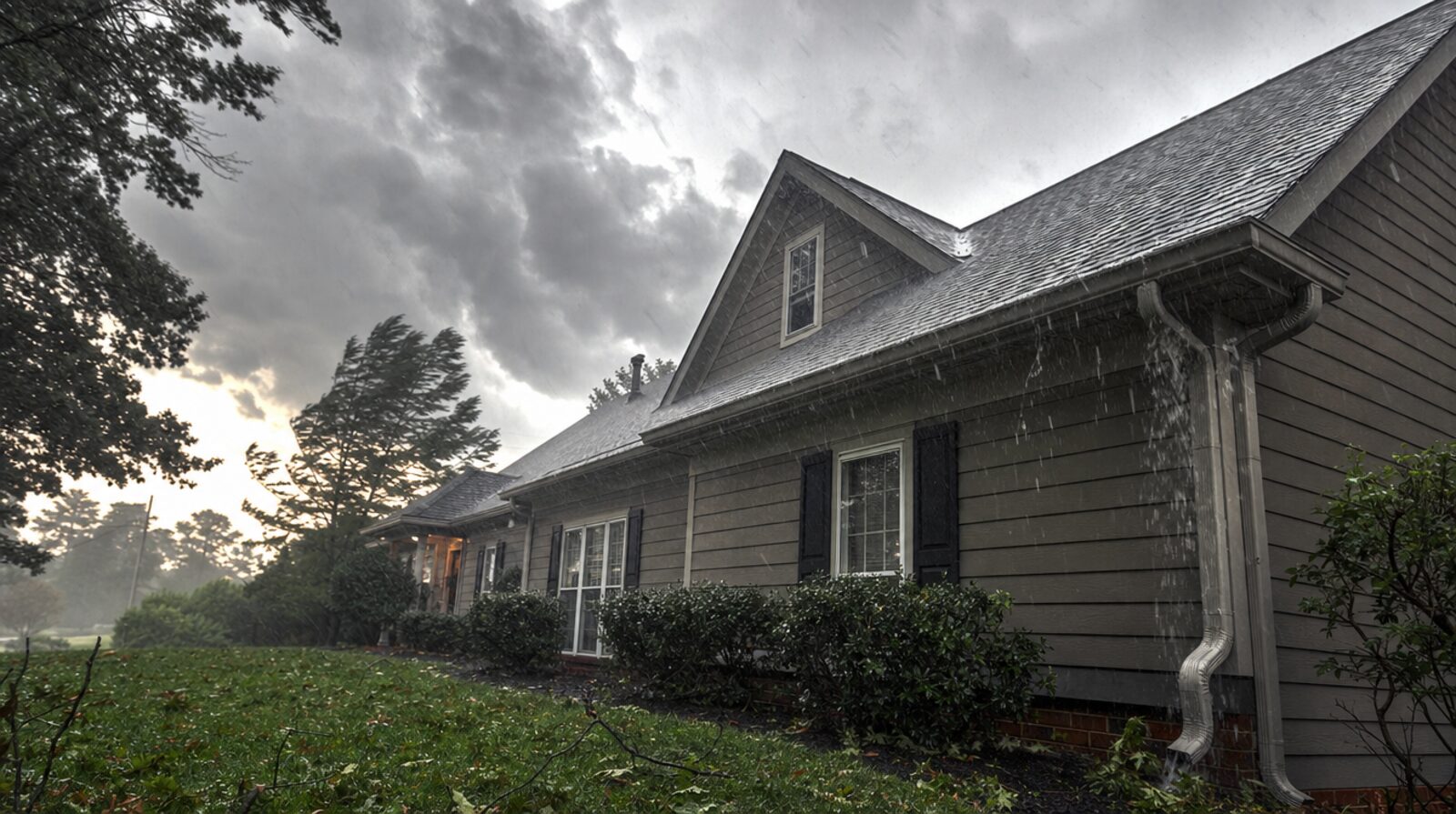
Every June, the calendar flips to hurricane season and folks around Greensboro, High Point, and Winston-Salem figure it's someone else's problem. We're a good four to five hours from the coast — no storm surge, no boarded-up windows, no mandatory evacuations. But we've spent enough summers up on Triad roofs after a tropical system rolled through to tell you plainly: what's left of a hurricane by the time it reaches us can still do real damage to a roof, and most homeowners never see it coming.
What Actually Reaches the Piedmont
By the time a hurricane or tropical storm tracks inland from the Carolina coast, it's usually weakened below hurricane-force winds. What we get instead is a broad, slow-moving rain engine — hours or even a couple of days of sustained wind in the 30-50 mph range, gusts higher, and rainfall totals that can run four to eight inches in a single event. That combination is different from the pop-up thunderstorms we're used to. A summer thunderstorm dumps hard for twenty minutes and moves on. A tropical remnant sits on top of us and grinds.
That distinction matters for a roof. Wind alone rarely tears off a well-installed roof in this region. It's wind plus prolonged saturation plus duration that finds the weak points — the shingle tab that was already lifting slightly, the flashing bead that had started to crack, the valley that collects more water than it was ever designed to shed in a normal storm.
The Three Failure Points We See Most
After every named storm or tropical remnant that passes through the Triad, the service calls follow a pattern. It's rarely a whole roof blown off. It's almost always one of these:
- Ridge cap and hip shingles. These sit at the highest, most wind-exposed part of the roof and take the brunt of sustained gusts. If the sealant strip underneath was already weathered, wind-driven rain gets up under the cap and works its way into the ridge board.
- Flashing around penetrations. Chimneys, plumbing vents, skylights — anywhere metal meets shingle is a joint, and joints are where prolonged rain finds gaps that a five-minute downpour never would. Step flashing and counter-flashing that look fine in dry weather can still let water track behind them once wind starts driving rain sideways for hours at a time.
- Valleys and gutters. Tropical rain totals overwhelm drainage that handles ordinary storms just fine. A valley with a little granule buildup or a gutter with a spring's worth of pollen and leaf debris can back water up under the shingle edge before you ever see a drip inside the house.
None of these are exotic. They're ordinary wear points that a normal storm doesn't stress hard enough to expose. A tropical system does.
What to Check Before and After a Storm Track Comes Through
You don't need to climb your own roof to do this well — and we'd rather you not, especially with rain in the forecast. But there's a useful routine:
Before the storm arrives
- Clear gutters and downspouts so the roof has somewhere to send the volume of water a tropical system brings.
- Walk the yard and look up from the ground with binoculars for shingles that look lifted, curled, or discolored compared to the rest of the field — that's often the first visible sign of a failing seal.
- Trim back any tree limbs hanging over the roofline. Sustained wind, not just gusts, is what brings limbs down on tropical storm days, and a limb doesn't need to be huge to punch through decking.
After the storm passes
- Check attic spaces for damp insulation, dark staining on the underside of the decking, or a musty smell — these show up before a ceiling stain does.
- Look in gutters for a heavier-than-usual load of granules, which can mean shingle surfaces took more abrasion than normal from wind-driven grit and debris.
- Note any soft spots underfoot if you do walk the roof, or from an upstairs window looking out at the field of shingles — sagging usually means water has already been sitting in the decking for a while.
Why This Matters More in a Piedmont Roof Than a Coastal One
Coastal roofing codes and coastal roofing materials are built around hurricane-force wind from the start. Piedmont roofs generally aren't — and don't need to be, most years. That's exactly why the occasional tropical remnant catches Triad homeowners off guard. The roof wasn't under-built; it just wasn't stress-tested for eight inches of sideways rain over eighteen hours very often. A roof that's five, ten, or fifteen years into its service life and has a few ordinary weak points that never mattered in normal weather can suddenly have those weak points matter a great deal.
The practical takeaway: treat hurricane season, roughly June through November, as your cue for a proactive look at the roof rather than a reactive one after you've already got a stain on the ceiling. A roof that's properly sealed at the ridge, flashed correctly around every penetration, and draining freely through clean gutters will ride out most of what reaches us from the coast without issue. The roofs that get hurt are almost always the ones with a small, already-existing problem that a normal year of weather never quite got around to exposing.
Stop Guessing on Price
Get precise measurements and a detailed price range for your specific roof right now using our AI technology. No home visit required.
Get my price