 Back to Guides
Hurricane Prep for Inland NC: Yes, You Still Need a Plan


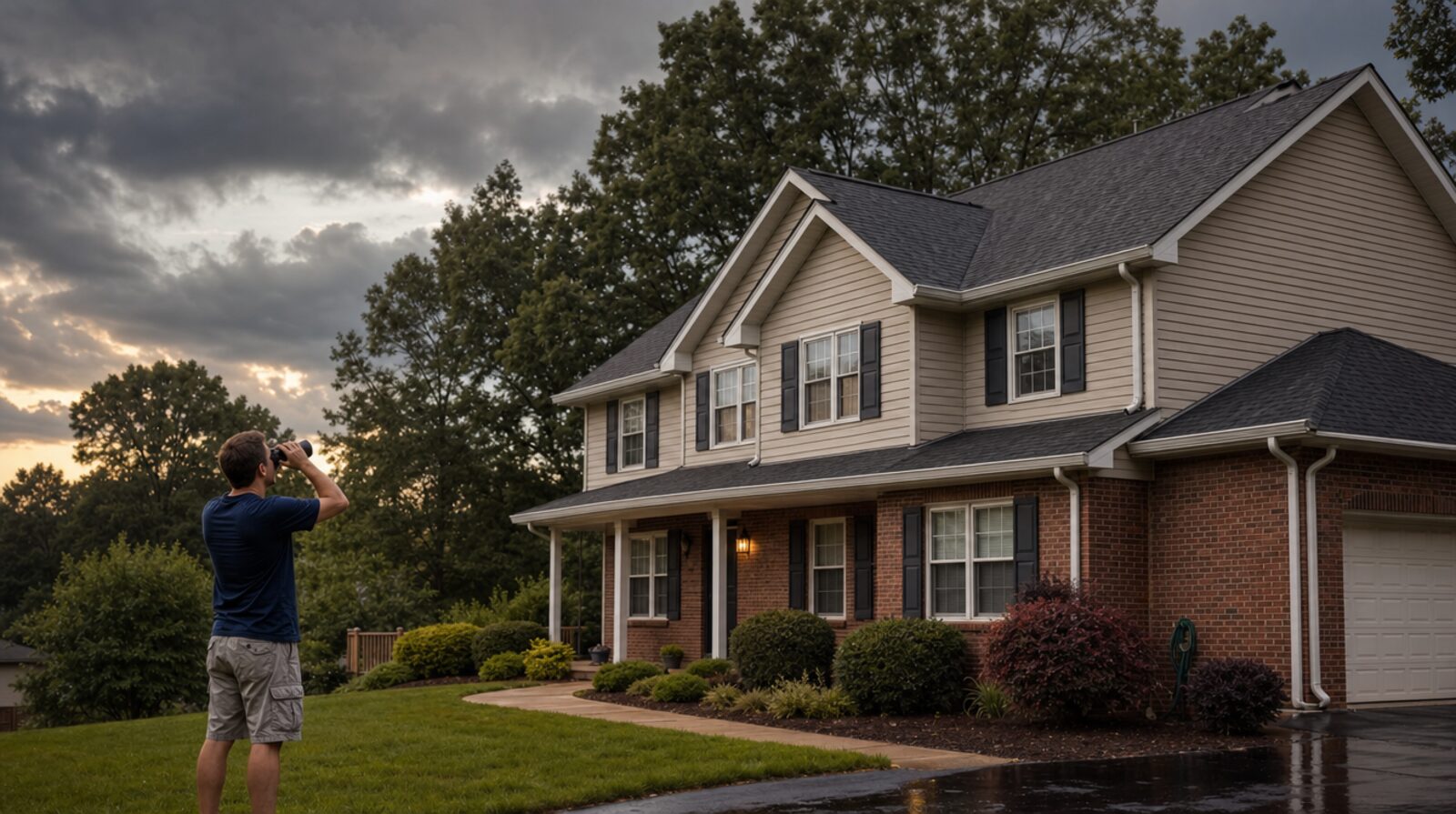
Every August and September, we get some version of the same phone call: "We're not on the coast, do we really need to worry about this?" The storm on the news made landfall at Wilmington or Myrtle Beach, and by the time it reaches Greensboro, High Point, or Winston-Salem, it's been downgraded to a tropical storm or even just a low-pressure system. But downgraded doesn't mean harmless. We've climbed onto plenty of Triad roofs the week after a "weakened" storm passed through and found lifted shingles, stripped ridge caps, and gutters torn half off the fascia. Inland doesn't mean immune — it just means the damage shows up differently than it does at the beach.
What Actually Hits Us Here
The Piedmont Triad sits far enough inland that we don't see storm surge and we rarely see sustained hurricane-force wind. What we do get, almost every season, is some combination of the following:
- Straight-line wind gusts from the storm's outer bands, often 40-60 mph, which is more than enough to lift a shingle that's already got a weak seal or a nail that backed out over the years.
- Sustained heavy rain — six, eight, sometimes over ten inches over a day or two. That's less about wind damage and more about exposing every weak point in your flashing, valleys, and gutter system.
- Falling limbs and trees, especially from older hardwoods that have taken on extra water weight. This is one of the most common causes of storm-related roof damage we see in this part of the state, full stop.
- Tornado spin-up risk from the outer rain bands, which is a genuine threat here even when the core of the storm stays hundreds of miles south.
None of that requires a Category 3 making landfall in your back yard. A tropical storm remnant crossing over Guilford, Alamance, or Randolph County on a Tuesday afternoon can do real damage to a roof that was already due for attention.
The Roof Walk-Through: Do This Before the Season Gets Going
You don't need to climb up there yourself — and honestly, we'd rather you didn't — but you can do a solid ground-level and attic inspection in about twenty minutes.
From the ground
- Walk the perimeter of the house with binoculars and look for shingles that are curling, cupping, or visibly lighter/darker than the rest of the field — that's granule loss, and it's a sign of an aging roof that's more vulnerable to wind lift.
- Check that ridge caps are sitting flat and continuous along the peak. A gap or a lifted section here is one of the first things that goes in a wind event.
- Look at your gutters. Are they pulling away from the fascia board anywhere? Sagging sections fill with water and debris, and a gutter full of standing water is dead weight that pulls harder in wind.
- Scan for any tree limbs hanging within about ten feet of the roofline. Anything that overhangs the house should come down before storm season, not after.
From the attic
- On a dry day, go up with a flashlight and look for any daylight coming through the roof deck, water stains on the sheathing or rafters, or a musty smell — all signs of an existing leak that a heavy rain event will make dramatically worse.
- Feel for consistent airflow at the soffit and ridge vents. Poor attic ventilation doesn't cause storm damage directly, but it accelerates deck rot, which means a roof that's more likely to fail when it's finally tested by wind and water.
Gutters, Downspouts, and the Drainage Path
We put this in its own section because it's the single most overlooked piece of hurricane prep for inland homes. A roof's job during a heavy rain event isn't just to keep water out — it's to move a large volume of water off the structure quickly. If the gutters are clogged with last fall's leaves and this spring's pollen cake, that water has nowhere to go but under your shingles, behind your fascia, or straight down your foundation wall.
- Clear gutters and downspouts completely, and run a hose through them to confirm water exits freely at the bottom of each downspout.
- Make sure downspout extensions are pointed away from the foundation — at least four to six feet if you can manage it.
- Check that gutter hangers are secure every few feet. If you can wiggle a section by hand, it won't hold up to a sustained downpour with wind behind it.
What to Do in the 24-48 Hours Before the Storm Arrives
Once there's a named storm or remnant system tracking toward the Carolinas with a real chance of reaching the Triad, here's the short list:
- Secure or store loose yard items — patio furniture, trampolines, grills, anything that can become a projectile in a wind gust.
- Photograph your roof and exterior from the ground, all four sides. If you do end up filing an insurance claim afterward, dated before-photos make the process faster and cleaner.
- Trim or remove any limbs you've been putting off, especially over the roof, driveway, or power line.
- Double-check attic access is clear so you can quickly check for leaks during or right after the storm without moving boxes at 11pm in a downpour.
- Know who to call. Keep a roofing contractor's number somewhere other than just your phone — write it down. Cell towers and power can both go down in a bad storm, and you don't want to be searching for a number when you've got water coming through a ceiling.
After the Storm Passes
Give it a day if you can, then do the same ground-level walk-around you did before the storm and compare against your photos. Look specifically for:
- New granules collected in the gutters or splash zones below downspouts — a sign of wind abrasion on the shingles.
- Any shingles that are missing, lifted, or creased.
- Fresh water stains on interior ceilings, especially near chimneys, skylights, and where roof planes meet.
- Debris caught in valleys or against roof penetrations like vent pipes and chimneys — these trap moisture and should be cleared promptly.
If anything looks off, get it looked at sooner rather than later. A small amount of wind-lifted flashing or a handful of missing shingles is a straightforward repair. Left through another rain event or two, it turns into rotted decking and interior damage that costs a lot more to put right.
Inland doesn't mean immune. It means the damage is quieter — a lifted ridge cap instead of a torn-off roof — and quiet damage is exactly the kind that gets ignored until it isn't small anymore.
We've spent decades watching what late-summer storms do to roofs across Greensboro, High Point, and Winston-Salem, and the pattern is consistent: the homes that come through cleanest are the ones where somebody did the boring twenty-minute walk-around in August, not the ones scrambling in October.
Stop Guessing on Price
Get precise measurements and a detailed price range for your specific roof right now using our AI technology. No home visit required.
Get my price