 Back to Guides
How to Tell If Your Roofer Is Actually Licensed and Insured in NC


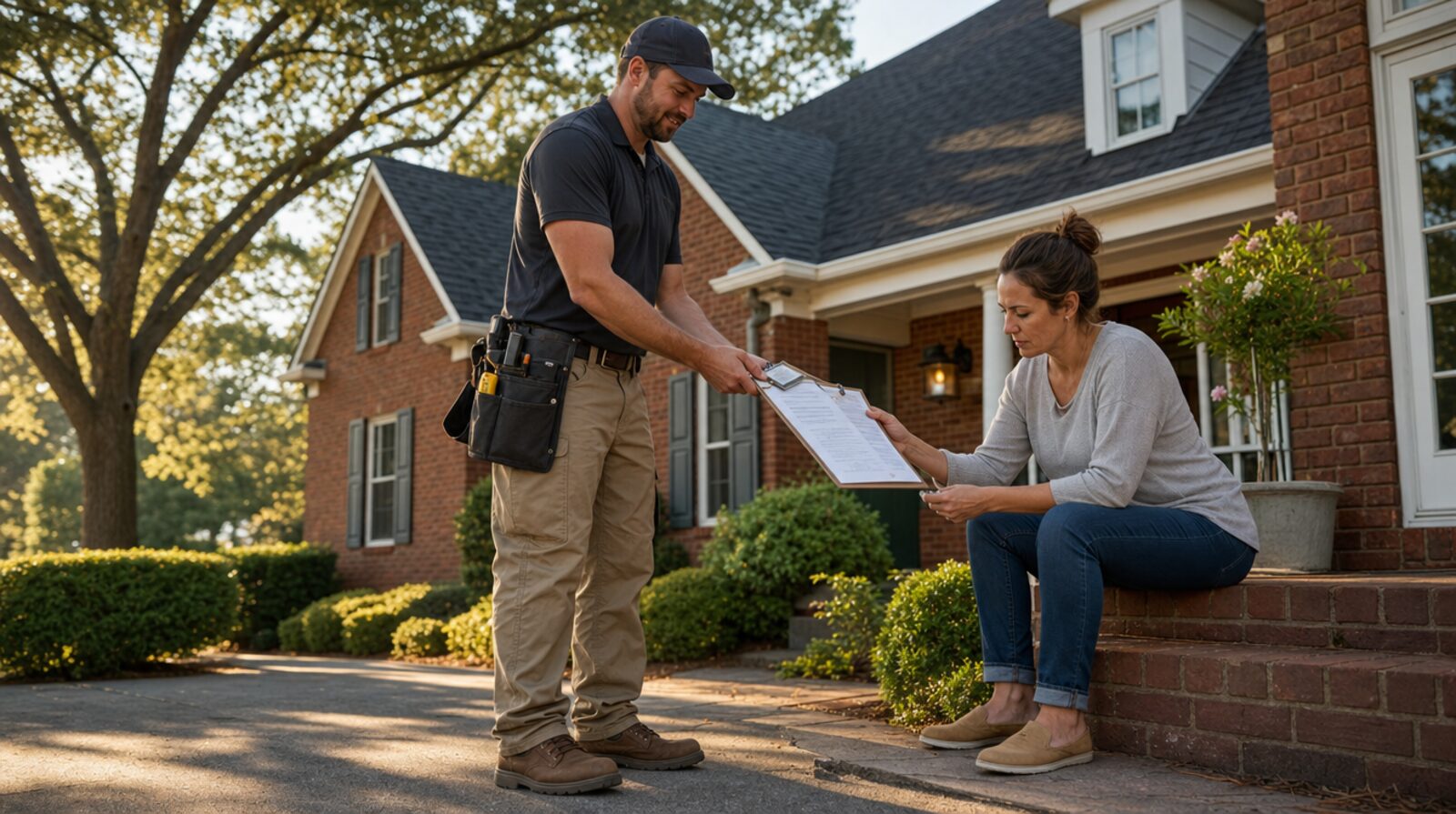
Every spring, after the last hard freeze breaks and homeowners start noticing the granules piling up in their gutters, the trucks show up. Some are driving legitimate local companies. Some are driving a magnetic sign, a cell phone, and a business that will not exist by August. The hard part is that both of them will tell you the same thing when you ask: "Oh yeah, we're licensed and insured." Here's how to actually find out if that's true.
What "Licensed" Actually Means in North Carolina
North Carolina does things a little differently than some states. There is no separate statewide "roofing license." Instead, roofing falls under the General Contractor license issued by the North Carolina Licensing Board for General Contractors, and it's only required by law once a single job — labor and materials combined — hits $40,000. That threshold surprises a lot of homeowners, because it means a contractor can legally tear off and replace a roof under that dollar amount without holding a state license at all.
That doesn't mean licensing is irrelevant below $40,000 — it means the license number becomes your best verification tool rather than a strict legal requirement. Here's what to do with it:
- Ask for the license number directly. A contractor who is telling the truth will rattle it off without hesitating or will have it printed right on their estimate, invoice, or truck door.
- Look up the number yourself. The Licensing Board keeps a public, searchable database of every licensed general contractor in the state — status, classification, and any disciplinary history included. Don't take a screenshot or a photocopy at face value; search it yourself the same day.
- Check the classification, not just the status. Licenses come in tiers (Limited, Intermediate, Unlimited) based on project size. A contractor whose license caps out at a small dollar amount has no business bidding a full tear-off on a two-story home.
- Confirm the name matches. Some outfits will show you a license that belongs to a different company entirely — a subcontractor, a relative, a business they used to work for. The name on the license needs to match the name on your contract.
If a company is doing roof-only work under that $40,000 threshold and has no state license, that's not automatically a scam — but it does mean you're relying entirely on their reputation, their insurance, and your own diligence, because there's no state board backing up their work.
Insurance: The Part Homeowners Skip and Shouldn't
Insurance is where most homeowners get burned, because it's easy to fake and expensive to verify — which is exactly why so few people actually do it. Saying "we're insured" costs a contractor nothing. Producing documentation costs them nothing either, if the coverage is real. So ask for it.
Two policies matter, and they're not the same thing
- General liability insurance covers damage to your property — a ladder through a window, a nail gun putting a hole in a skylight, a dropped bundle of shingles cracking your driveway. Without it, that repair bill is yours.
- Workers' compensation insurance covers the crew. This is the one people forget. If a worker falls off your roof and the company has no workers' comp, in many cases the injured worker's medical bills and lost wages can become a claim against your homeowner's policy or, worse, a direct lawsuit against you personally.
How to actually verify it
- Ask for a Certificate of Insurance (COI) — a one-page document their insurance agent issues, not something the contractor typed up themselves.
- Check the effective and expiration dates. Policies lapse. A COI from eighteen months ago tells you nothing about today.
- Call the insurance agent or carrier listed on the certificate and confirm the policy is active. This takes about five minutes and it's the single most reliable step in this entire process.
- Ask to be named as a "certificate holder" so you're notified directly if the policy is canceled mid-project.
A legitimate roofing contractor will not blink when you ask for a COI. A contractor who gets cagey, changes the subject, or promises to "email it over" and never does has just told you everything you need to know.
Other Signs Worth Weighing
Licensing and insurance are the two that carry legal and financial weight, but a few other habits tend to travel together with the contractors worth hiring:
- A permanent local address you can drive to, not just a P.O. box or a phone number with an out-of-state area code following the storm season around.
- Written estimates that spell out materials, scope, and payment terms — not a verbal number scrawled on the back of a business card.
- Manufacturer accreditation for the materials they're installing. Ask which shingle or metal lines they're set up to install, and ask them to explain what that accreditation actually required them to do.
- References you can call, ideally for jobs done in your own county in the last year or two, not a stack of five-star reviews with no names attached.
- A willingness to let you take your time. Storm-chasing crews lean hard on urgency — "sign today or the price goes up," "we're already in the neighborhood." A contractor planning to be here next year doesn't need to rush you into a decision on your roof.
None of this takes more than a phone call or two, and it's worth doing before a single shingle comes off your house. Your roof is one of the largest single investments you'll make in your home — a few minutes checking a license number and calling an insurance agent is cheap insurance against a much bigger headache.
Stop Guessing on Price
Get precise measurements and a detailed price range for your specific roof right now using our AI technology. No home visit required.
Get my price