 Back to Guides
How to Read a Roofing Estimate Like a Pro


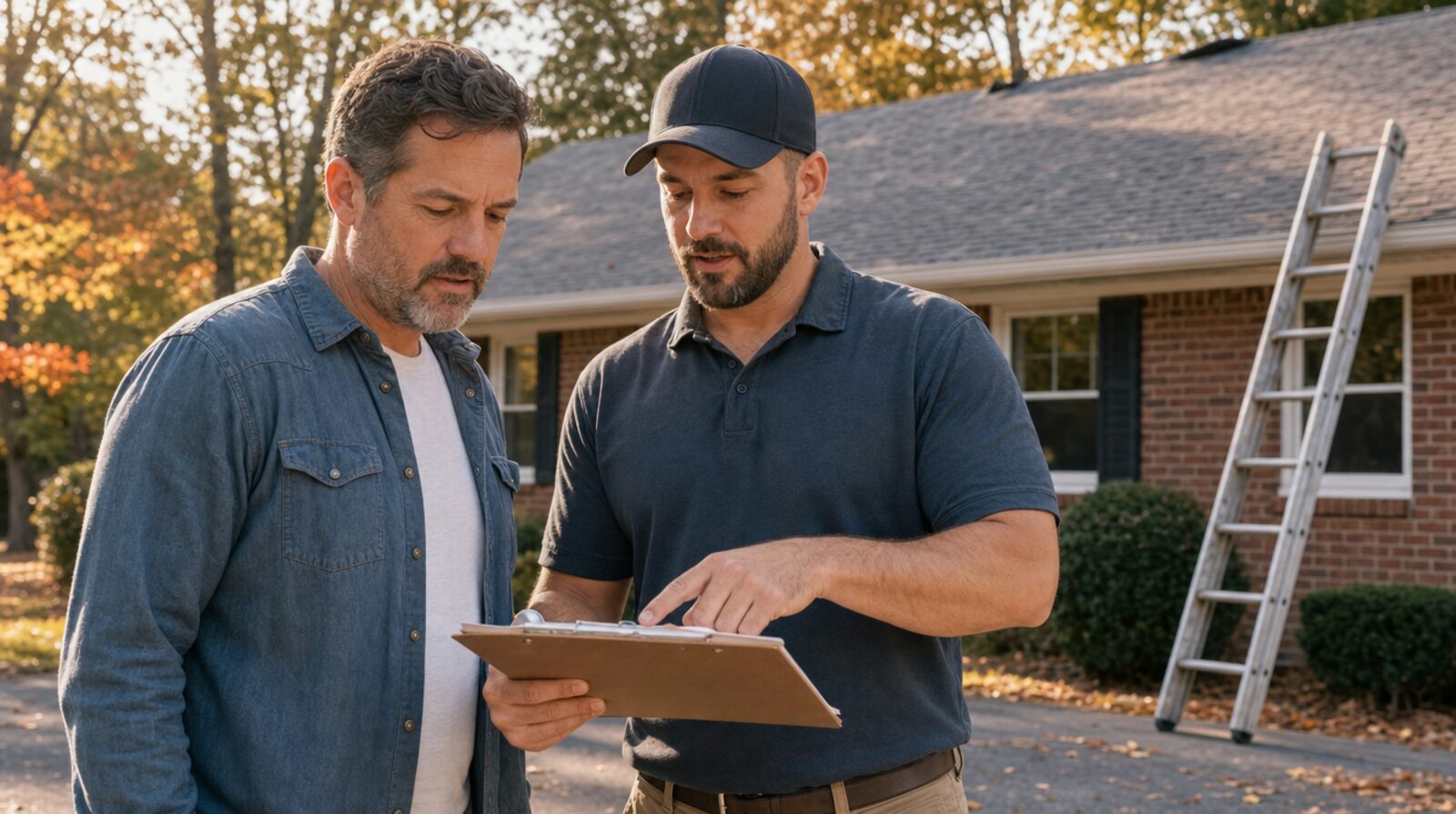
Hand three different contractors a ladder and a look at your roof, and you'll get back three estimates that don't seem to have anything in common. One's typed on letterhead with a dozen line items. Another's a single number scrawled on a business card. A third reads like a legal document. After years of climbing roofs across Greensboro, High Point, and Winston-Salem, we can tell you the paper itself says almost as much as the price does. Learning to read it is the difference between comparing contractors and just comparing numbers.
Start With What's Actually Being Measured
Every legitimate estimate should start with a roof measurement in squares — one square equals 100 square feet. If the paper you're holding jumps straight to a dollar figure without ever stating the square footage or number of squares, that's your first red flag. You can't verify a price you can't verify a quantity for.
Pull out your own tape measure or pace off the footprint of your house and compare it to what's on the estimate. A single-story ranch in the 1,800-square-foot range typically works out to somewhere around 20-24 squares once you account for roof pitch and overhangs — a steeper pitch or a roof with dormers, hips, and valleys will run higher than the flat footprint suggests. If two estimates for the same house are off by more than a few squares from each other, ask why. Sometimes it's a measuring error. Sometimes it means one contractor is planning to reuse old flashing or skip areas they shouldn't.
Tear-Off vs. Layover
Look for the word "tear-off" or "layover" (also called "roof-over"). A layover means the new shingles go on top of the old ones — cheaper up front, but it hides the condition of your decking and shortens the life of the new roof. North Carolina building code limits how many layers can be stacked before a full tear-off is required, so if your roof already has two layers, layover shouldn't even be on the table. A proper estimate states which one you're getting, not just a price that assumes you'll figure it out later.
The Line Items That Separate a Real Quote From a Guess
A single lump-sum number tells you almost nothing. Here's what a genuinely thorough estimate breaks out, and why each piece matters:
- Tear-off and disposal: Removing old shingles and hauling them away. If this isn't listed separately, ask whether it's included at all — it's common enough for homeowners to get surprised by a "haul-away fee" added after the crew is already on the roof.
- Decking repair or replacement: Priced per sheet of plywood or OSB, usually somewhere in the range of a few dollars per square foot installed. A good estimate includes a per-sheet rate for decking that turns out to be rotted or soft once the old shingles come off — because on a roof more than 15-20 years old, some amount of deck replacement is nearly always found, not hypothetical.
- Underlayment: The moisture barrier between decking and shingles. Synthetic underlayment has largely replaced felt paper on quality jobs. If the estimate just says "underlayment" with no type specified, ask.
- Ice and water shield: A self-adhering membrane required along eaves, valleys, and around penetrations in much of North Carolina's building code for freeze-thaw protection. This should be called out by name and location, not lumped into "materials."
- Flashing: The metal at chimneys, walls, skylights, and roof-to-wall transitions. Flashing failure is one of the most common sources of leaks we get called out for, and it's also one of the easiest things for a lowball estimate to quietly skip by reusing the old flashing instead of replacing it.
- Ventilation: Ridge vents, soffit vents, or box vents. Attic ventilation affects both shingle lifespan and energy costs, and it's frequently left off cut-rate estimates entirely.
- Shingles or roofing material: This line should name the specific product line, not just "architectural shingles" — pricing and wind ratings vary meaningfully between product tiers even within the same manufacturer.
- Permit fees: Most Piedmont Triad municipalities require a permit for a full roof replacement. If it's not on the estimate, ask whether the contractor is pulling one — and if the answer is vague, that's worth pausing on.
- Warranty terms: Separate the manufacturer's material warranty from whatever coverage the contractor offers on their labor. Ask what's actually covered, for how long, and what would void it — a roof that isn't installed to the manufacturer's specifications can void material coverage even if the shingles themselves are fine.
Comparing Two Estimates Side by Side
The temptation with any estimate is to look at the bottom-line number first. Resist it until you've lined up the line items. A $9,500 estimate and a $13,000 estimate on the same house aren't automatically the cheap option and the expensive one — they might be two different scopes of work wearing the same roof's clothing.
- Match the material. Confirm both quotes specify the same shingle line and weight class. A builder-grade three-tab and a heavier architectural shingle can carry a meaningfully different price per square, and the gap in the estimate should track the gap in the product.
- Check what's included in decking repair. One estimate might include a set number of sheets in the base price; another might charge for every sheet as a change order. Ask what happens if more decking needs replacing than expected, and get the per-sheet rate in writing either way.
- Look for ice and water shield and flashing by name. If one estimate lists them and the other doesn't, that's not a coincidence — it's a scope difference, and it's usually where the lower number came from.
- Ask how disposal is handled. Dumpster on site, or hauled off in the crew's trucks? Either can work, but it should be spelled out, not left as an assumption.
- Read the payment schedule. A typical structure involves a deposit, with the balance due on completion — be cautious of anyone asking for the full amount upfront before any work has started.
A roofing estimate isn't a single number to negotiate down. It's a scope of work with a price attached — and the scope is where the real differences live.
Questions Worth Asking Before You Sign
Once you've read through the paper itself, a short conversation clears up whatever's still ambiguous:
- Is this a fixed price, or does it assume a certain amount of decking is already sound?
- Who is pulling the permit, and is that fee included?
- What happens to existing flashing — reused or replaced?
- How long is the crew expected to be on site, and what happens if weather delays the job?
- What does the workmanship coverage actually cover, and for how long?
An estimate that answers these questions clearly, in writing, before a nail goes in is worth more than one that promises the lowest price and figures out the details later. The roof over your head in the Piedmont Triad has to handle everything from summer thunderstorms to winter ice, and the estimate you sign is the blueprint for how well it's built to do that.
Stop Guessing on Price
Get precise measurements and a detailed price range for your specific roof right now using our AI technology. No home visit required.
Get my price