 Back to Guides
Gutter Guards: Worth the Investment for Triad Homes?


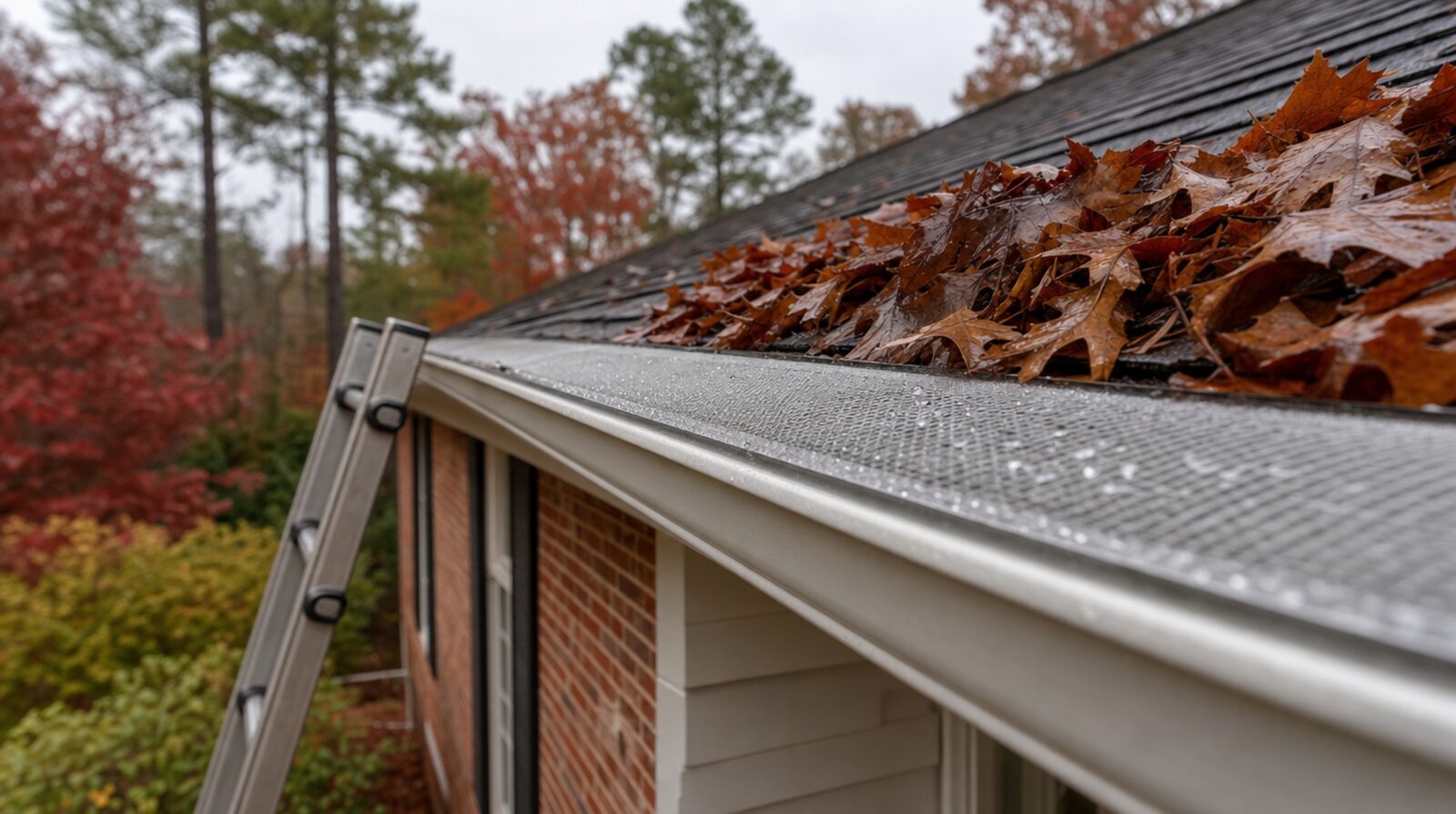
Every fall we get the same phone call: a homeowner standing in the yard looking up at gutters overflowing with wet leaves, wondering if there's a way to make this stop being an annual chore. Gutter guards come up in almost every one of those conversations. They're not a scam, and they're not magic either — the honest answer is that they're worth it for some Triad homes and a waste of money for others, depending on what's actually shading your roof.
What Gutter Guards Actually Do
A gutter guard is a cover or screen that sits over the gutter channel and is supposed to let water in while keeping leaves, seed pods, and shingle grit out. In the Piedmont, where we've got mature oaks, sweetgums, and pines dropping debris across three separate seasons — spring seed pods, summer leaf litter, and the big autumn dump — that's a real problem worth solving. Clogged gutters don't just overflow and annoy you. They hold standing water against your fascia board and roof edge, which is where we see rot start on older homes, and in winter that trapped water is exactly what feeds ice dams along the eave.
The guards don't eliminate maintenance, though, no matter what the packaging implies. What they do is change the type of maintenance. Instead of scooping wet muck out of the trough twice a year, you're occasionally brushing debris off the top of the screen or hosing off pollen and grit that builds up on the mesh. For a lot of homeowners that trade is worth it. For homes without heavy tree cover, it's a trade you don't need to make.
The Different Types, and Where Each One Falls Short
Not all gutter guards behave the same way once they've been on a roof through a Carolina summer.
- Mesh screens (aluminum or stainless) are the most common option we install. They handle leaves well but fine pine needles and sweetgum seed pods can still work their way through smaller mesh, and they need an occasional brush-off.
- Reverse-curve (surface tension) guards use the curve of the cover to direct water down into the gutter while debris slides off the edge. They shed leaves very well but can struggle in a heavy downpour — water can shoot past the gutter entirely if the curve isn't matched to your roof pitch.
- Foam inserts are the cheapest option and the one we steer people away from most often. They're easy to install yourself, but foam breaks down under UV exposure faster than the other options, and small debris gets embedded in the foam itself rather than staying on top where you can clear it.
- Micro-mesh systems are the finest screen available and the best at keeping out pine straw and grit, but they're also the ones most prone to pollen film buildup each spring, which can slow water entry until it's rinsed off.
None of these are installed loose on top of your existing gutters and forgotten. They need to be sized to your gutter width, pitched correctly, and fastened so wind doesn't get under the edge during a summer storm.
When They're Worth It in the Triad — and When They're Not
The deciding factor isn't the guard, it's your lot. If your home sits under or near mature hardwoods — the kind of tree canopy common in older Greensboro, Winston-Salem, and High Point neighborhoods — guards typically pay for themselves within a few years just in the ladder trips you avoid, and more importantly in the water damage you prevent. Two-story homes and homes with steep pitches are the other strong case for guards, since cleaning those gutters safely usually means hiring it out anyway.
On the other hand, if your house is in a newer subdivision with young trees and open sky above the roofline, guards are a lower priority. You'll still get some seed pods and shingle grit in the gutter, but not enough volume to justify the upfront cost. In that situation, we'd rather see the money go toward making sure your downspouts are extended away from the foundation and your gutters are hung with proper pitch — the drainage fundamentals matter more than the cover.
A few things we tell every homeowner considering guards, regardless of which style they pick:
- Guards don't eliminate the need to look at your roof edge periodically — they just change what you're looking for.
- Ice dam risk in our climate is more about attic insulation and ventilation than gutters. Guards help keep the gutter clear, but they won't fix an underlying ventilation problem.
- Whatever guard you choose, make sure it's compatible with your existing gutter profile — a mismatch is the most common reason we get called to fix a guard installation gone wrong.
If you're not sure which category your home falls into, walk your yard after the next windy day and see what's actually landing on the roof. That fifteen-minute observation will tell you more about whether gutter guards make sense than any product brochure will.
Stop Guessing on Price
Get precise measurements and a detailed price range for your specific roof right now using our AI technology. No home visit required.
Get my price