 Back to Guides
What to Do in the First 24 Hours After a Tree Falls on Your Roof


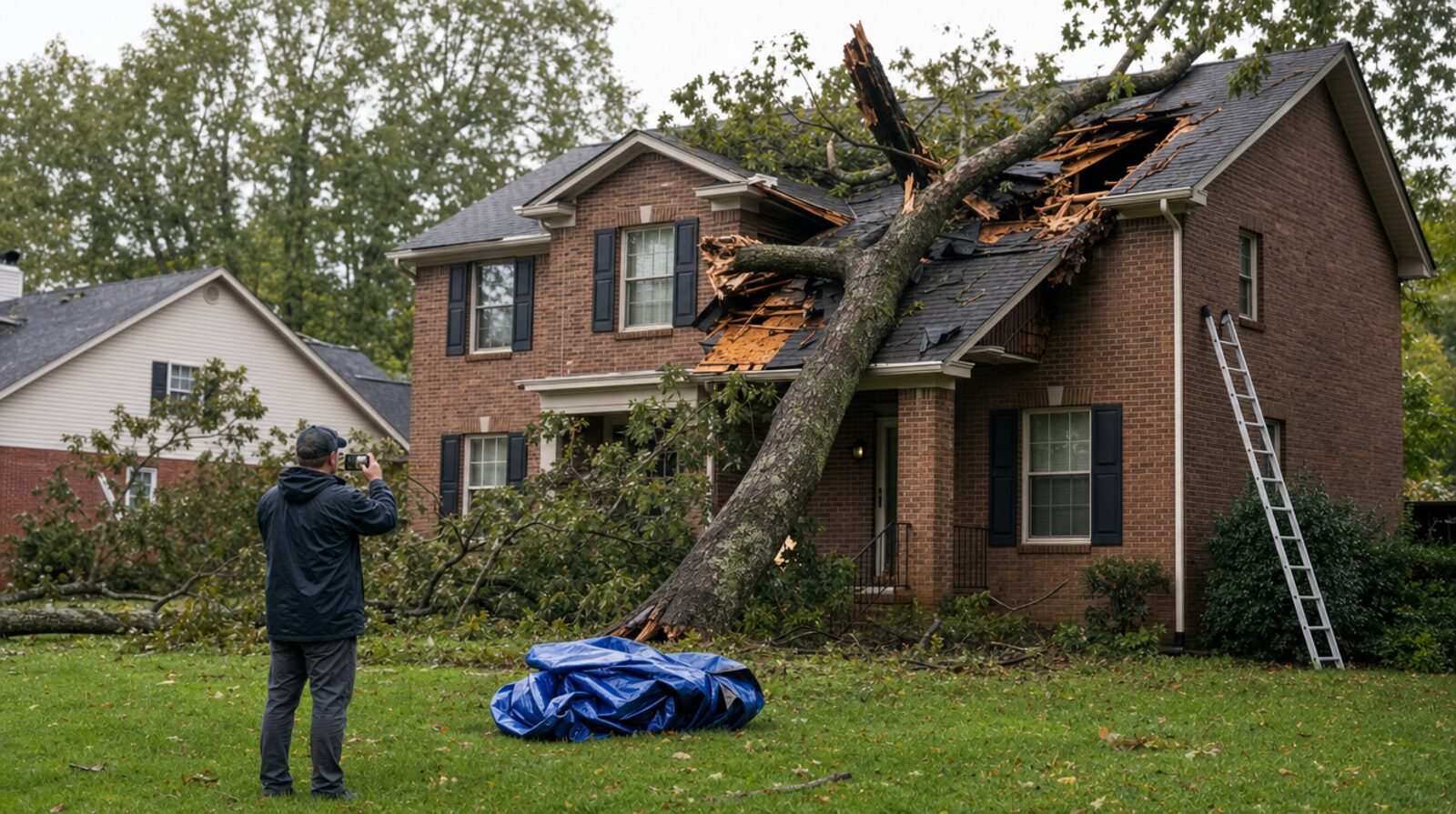
We've walked into more than a few Triad living rooms with a water oak sitting in the middle of the couch. The first hour after a tree comes through your roof feels chaotic, but the actual priorities are simple: keep people safe, stop water from spreading, and document everything before it gets touched. Here's the order we tell homeowners to follow, based on what actually matters in that first day.
1. Get everyone out and check for hazards
Before you worry about the roof, clear the room. A limb heavy enough to punch through decking can also compromise ceiling joists that look fine but aren't. Look up before you look around — sagging drywall, a bulging ceiling, or a crack that's spreading is your cue to stay out of that room entirely, not to grab a broom and start cleaning.
If any part of the tree is touching a power line, or you smell gas, back away from the house and call 911 or your utility company immediately. Duke Energy and Piedmont Natural Gas both treat downed lines and gas leaks as emergencies, and neither should ever be handled by a homeowner. This is also true if a limb has punched all the way through into a bedroom or living space with people still in the house.
2. Document before anything moves
Once everyone is safe, grab your phone and start shooting photos and video — before the tree service arrives, before you move a single branch. Get wide shots of the tree in relation to the house from multiple angles, then close-ups of the point of impact, any punctured decking or shingles, and gutters or siding that got clipped on the way down. Walk the interior too. Water stains, ceiling sag, and drips need to be photographed at the first sign, because insurance adjusters want to see the damage as it happened, not after a week of secondary staining makes it hard to tell what came from where.
A few things worth noting in writing (a text to yourself or a notes app works fine):
- What time the tree fell and what the weather was doing
- Whether the tree was on your property or a neighbor's — this matters for insurance
- Any interior leaking, and which rooms are affected
- Whether the tree is resting on the roof structurally or just draped across it
3. Call your insurance company the same day
Most homeowners' policies in North Carolina cover tree damage to the dwelling regardless of whose tree it was, but the claim clock starts when you report it, not when the adjuster shows up. Call and open the claim before end of day if you can. Ask three things directly: what your policy requires for emergency mitigation, whether they have a preferred vendor list or if you're free to choose your own contractor, and what the deductible looks like for wind or storm-related claims.
Keep every receipt from this point forward — tarps, plywood, a hotel room if the house isn't livable, a tree removal invoice. Insurers generally reimburse reasonable emergency mitigation costs, but only with documentation.
4. Tarp the hole — leave the tree to the professionals
This is where homeowners get hurt every year, and it's worth being blunt about. Do not climb onto a roof with a tree resting on it. The tree can shift as branches settle or as a chainsaw starts cutting into it, and a roof deck that's already been punctured or soaked can give way without warning. Tree removal and roof access in this situation is a job for a tree service and a licensed roofing contractor working together, not a ladder and a Saturday afternoon. What you can do safely from the ground or attic: if rain is still falling and water is actively coming through, position buckets or a tarp inside the attic to catch what you can, and pull back any insulation that's already saturated — wet insulation left in place is one of the fastest paths to mold, and it needs to come out within the first day or two regardless of what else is going on.
If the tree has already been removed or was small enough that a portion of the roof is exposed with no one on it, a temporary tarp anchored under the shingle courses above the damage — not just draped over the ridge — is what actually keeps wind-driven rain out. This is a two-person job at minimum with proper fall protection, and honestly, it's the kind of thing most Triad roofing companies will come do as an emergency call rather than have you attempt it yourself.
5. Protect what's inside
While you're waiting on the tree service or your roofer, move furniture, electronics, and anything irreplaceable away from the leak path. Aim a box fan at any wet carpet or flooring once the active dripping has slowed — standing water and humidity in a closed-up North Carolina summer will start growing mold in as little as 24 to 48 hours. If drywall or ceiling material is visibly sagging with trapped water, it's better to relieve that pressure with a small controlled puncture (a screwdriver through the center of the bulge, with a bucket underneath) than to let it collapse on its own later, often when no one's in the room to catch it.
Once the immediate scene is stable, call a roofing contractor for a full inspection. A tree impact often does more than the obvious hole — cracked rafters, dislodged flashing, and granule loss well away from the point of contact are common, and they're easy to miss from the ground.
Stop Guessing on Price
Get precise measurements and a detailed price range for your specific roof right now using our AI technology. No home visit required.
Get my price