 Back to Guides
Emergency Tarping: What It Does (and Doesn't) Protect After Storm Damage


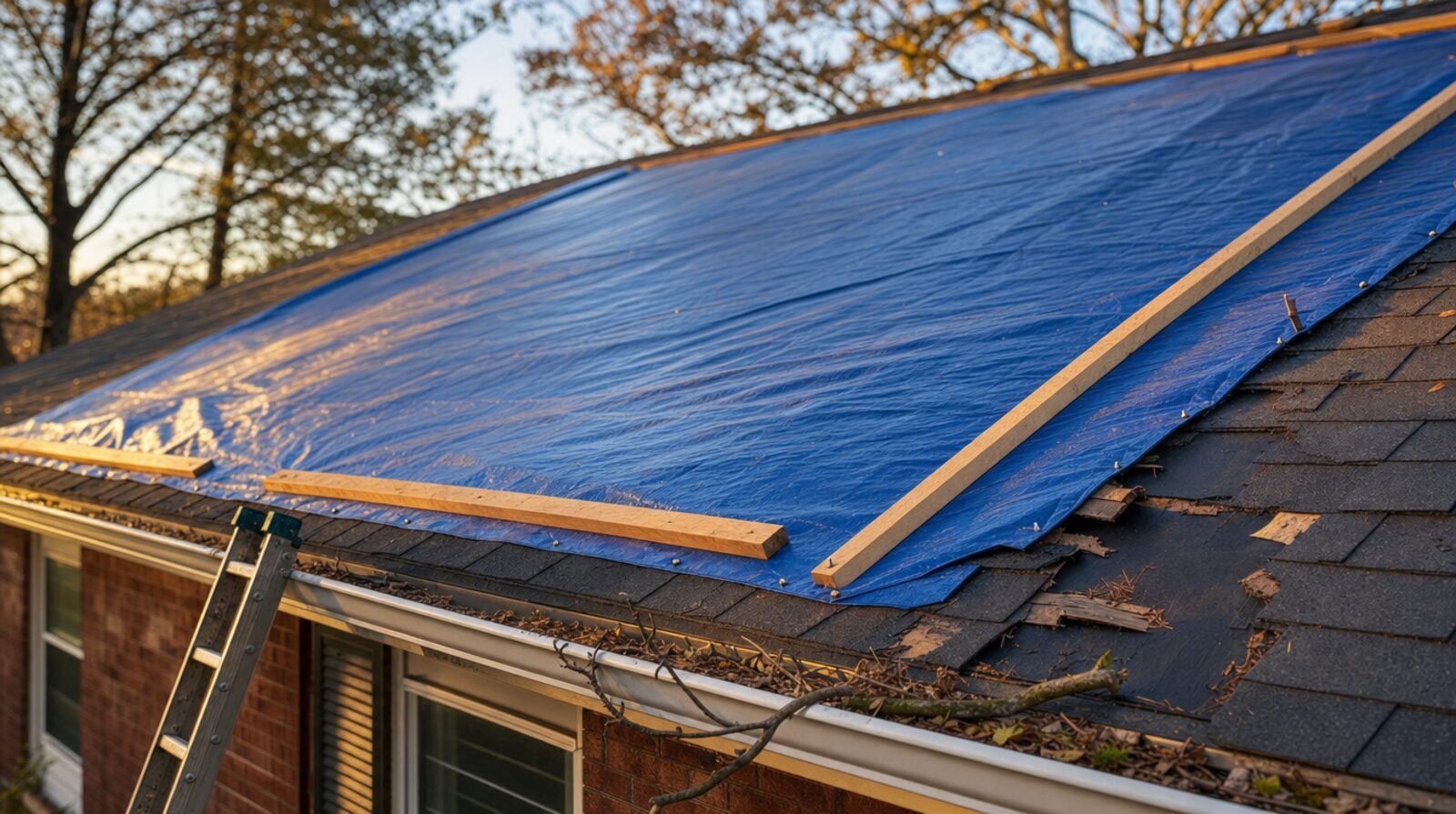
After a bad storm rolls through the Piedmont Triad, we get the same call a dozen times over: a tree limb came down, shingles are missing, and there's a blue or silver tarp stretched across part of the roof by the time we arrive. Homeowners often assume that tarp is the fix. It isn't. It's a pause button — and understanding what it actually protects, and what it doesn't, makes a real difference in whether the next few weeks go smoothly or turn into a second round of damage.
What a Properly Installed Tarp Actually Does
A correctly installed emergency tarp has one job: stop bulk water intrusion through an open hole in the roof deck. When wind, hail, or a falling limb strips shingles or punches through decking, rain doesn't just sit on top — it finds every seam, nail hole, and gap and works its way into the attic. A tarp, when it's installed right, buys you time by:
- Sealing the breach. A heavy-gauge tarp (we typically use reinforced poly in the 6-mil range or better) covers the damaged section and several feet of surrounding undamaged roofing, so wind-driven rain can't sneak in around the edges.
- Anchoring to structure, not just shingles. The tarp should be wrapped over the ridge when possible and fastened with wood furring strips screwed through the tarp into the roof deck or rafters — not just a scattering of nails through the plastic itself, which tears loose in the next gust.
- Shedding water off the edge. A good tarp job is shaped and pitched so water runs off into a gutter or off the eave, not pooling in a low spot where it will eventually find a pinhole and drip through anyway.
- Buying time for insurance and scheduling. It keeps the interior of the home dry enough to get an adjuster out, get a full inspection done, and get a permanent repair scheduled without the damage spreading in the meantime.
That's the whole job. It's a barrier, not a repair, and it's not meant to last through a full season.
What Tarping Does Not Protect Against
This is the part that catches homeowners off guard, and it's the reason we tell every customer: don't relax just because there's a tarp up.
- It won't stop every leak. Tarps have seams, grommets, and edges. In sustained wind-driven rain — the kind that comes sideways in a Carolina thunderstorm — water can still work under the edges or through a staple hole. A tarp reduces water intrusion dramatically; it doesn't guarantee a bone-dry attic.
- It won't hold up to a second storm the same way twice. Poly tarps degrade in UV light and flex in wind. A tarp that did its job perfectly in the storm that put it there can be sun-brittled or wind-loosened within a couple of weeks, especially in the summer sun we get here. They need to be checked, not just installed and forgotten.
- It doesn't address hidden structural damage. A tarp covers what you can see from outside. It does nothing for a compromised rafter, saturated decking that's already starting to sag, or insulation that got wet before the tarp went up. Those problems don't go away — they just keep developing underneath the tarp, out of sight.
- It's not rated for long-term exposure. Most tarps are built for weeks, not months. Left up too long, the material itself starts to fail — UV breakdown makes it brittle, edges fray, and grommets pull through. We've pulled tarps off roofs that were more hole than fabric because a repair got delayed far longer than anyone planned.
- It won't stop condensation and trapped moisture issues. Sealing a roof under a tarp can trap moisture that's already in the decking, especially if the covered area can't breathe at all. That's a tradeoff worth knowing about rather than being surprised by later.
How Long Is a Tarp Actually Good For
There's no single answer, because it depends on material, installation quality, and weather exposure, but here's the practical guidance we give homeowners: treat a tarp as a two-to-four-week solution, not a season-long one. If a permanent repair or full re-roof is going to take longer than that — which can happen when materials are backordered or an insurance claim is still being processed — the tarp should be inspected and, if needed, re-secured or replaced rather than left to ride it out. After heavy wind events in particular, walk the yard and look up at the tarp from the ground. Look for:
- Flapping corners or edges that have pulled loose from the furring strips
- Visible tears, especially near grommets or fold lines
- Pooling water sitting in a low spot instead of draining off
- Any sagging that suggests water has already gotten underneath
What to Do While the Tarp Is Up
A tarp is your cue to move, not your cue to wait. While it's doing its job, use the time to get ahead of the permanent fix:
- Document the damage with photos before and after the tarp goes on — this matters for insurance.
- Check your attic or top-floor ceilings after any rain for new staining, which tells you the tarp isn't holding a full seal somewhere.
- Get a full roof inspection scheduled, not just a look at the obvious hole — storm damage often extends well past the spot that failed first.
- Ask your contractor what the tarp is rated to handle and when they plan to check on it, so nobody assumes it's a set-it-and-forget-it fix.
A tarp did exactly what it was supposed to do if your home stays dry long enough to get a proper repair done right. Just don't mistake "dry for now" for "fixed."
Stop Guessing on Price
Get precise measurements and a detailed price range for your specific roof right now using our AI technology. No home visit required.
Get my price