 Back to Guides
Attic Ventilation 101: Why a Hot Attic Is Silently Ruining Your Roof


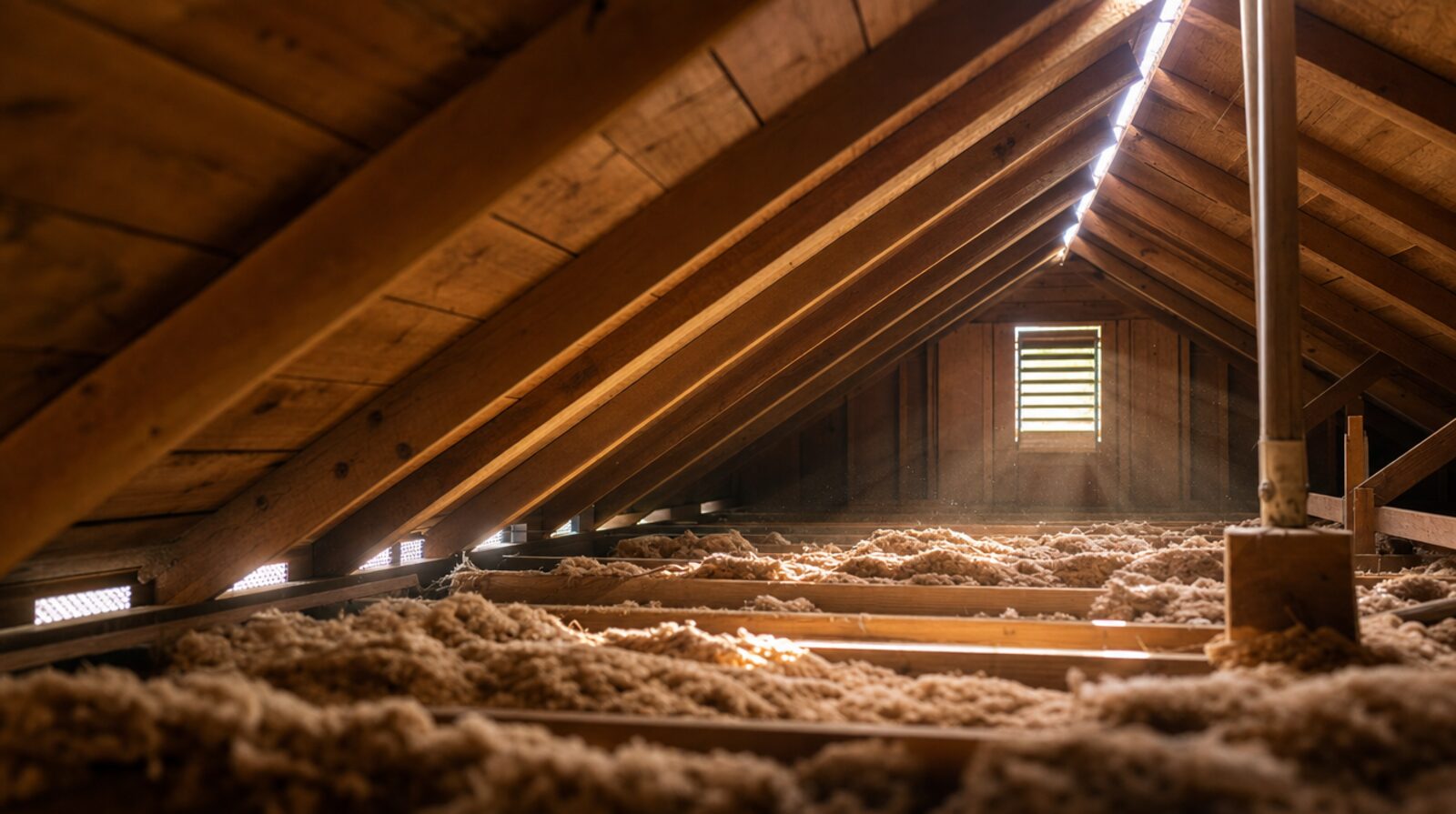
Walk into most attics in Greensboro, High Point, or Winston-Salem on a July afternoon and you'll understand the problem in about ten seconds flat. It's brutal up there — sometimes 130 degrees or more under a dark shingle roof with the sun beating down. Homeowners tend to shrug this off as normal. It isn't. A hot attic doesn't just make your upstairs bedrooms miserable and your air conditioner run nonstop — it's slowly cooking the roof from the inside out, and in winter that same poor airflow sets you up for ice damming and moisture rot. Ventilation is one of those roof components nobody thinks about until something fails, but it has as much to do with how long your shingles last as the shingles themselves.
What a Hot, Stagnant Attic Actually Does to Your Roof
Asphalt shingles are rated and warranted based on lab testing that assumes reasonable attic temperatures. When hot air has nowhere to go, it radiates straight up into the underside of the roof deck, which pushes shingle temperatures well past what the manufacturer accounted for. The asphalt oils that keep shingles flexible bake out faster, granules loosen, and the shingle becomes brittle years ahead of schedule. We regularly pull shingles off Triad houses that are curling and cracking a decade before they should — and nine times out of ten, the attic tells the story before we even climb the ladder.
It's not just heat, either. In winter, warm, moist air from the living space rises into the attic. Without a path out, that moisture condenses on the cold underside of the roof deck and rafters. Over a season or two that shows up as:
- Dark staining or mold on the roof sheathing and rafters
- A musty smell in upstairs closets or the attic hatch
- Rusted roofing nails poking through the deck
- Soft or delaminating plywood/OSB sheathing near the eaves
- Ice damming along the eaves after a snow or hard freeze, even here in the Piedmont where it only happens a few times a winter
Ice dams are really a ventilation problem wearing a winter disguise. Heat escaping into an unventilated attic melts snow on the upper roof, the meltwater runs down and refreezes at the cold eaves where there's no heat loss underneath, and you get a ridge of ice that backs water up under the shingles. We don't get the deep, sustained cold of the mountains or the Northeast, but a week of freezing nights after a snow is enough to cause real damage if the attic isn't managed correctly.
Balanced Ventilation: Intake and Exhaust Have to Work Together
The concept homeowners miss most often is that ventilation only works as a system — you need air coming in low and going out high, in roughly equal amounts, so it flows continuously across the underside of the roof deck. A house with a ridge vent but no soffit vents (or soffit vents that are blocked by insulation) isn't ventilated — it's just got a hole in the roof. The ridge vent will actually pull conditioned air out of the living space instead of attic air, which wastes energy and can backdraft other things in the house.
A properly balanced system generally includes:
- Intake at the eaves — continuous soffit vents or individual vents spaced along the underside of the overhangs, pulling cooler outside air in
- Exhaust at or near the ridge — a continuous ridge vent, or box/turbine vents spaced across the upper roof, letting hot, moist air escape
- A clear path between them — baffles (sometimes called rafter vents) installed at the eaves so blown-in or batt insulation doesn't choke off the soffit intake
- Roughly balanced net free area — intake and exhaust openings sized to work together rather than one overpowering the other
Mixing vent types on the same roof — running a ridge vent and powered attic fans at the same time, for instance — often does more harm than good, because the fan can pull its makeup air from the ridge vent instead of the soffits, short-circuiting the whole system. If you've got gable vents and a ridge vent fighting each other, that's another common mismatch we find during inspections.
Signs Your Attic Isn't Breathing Right
You don't have to be a roofer to catch the warning signs. On a summer afternoon, an attic that's dramatically hotter than the outside air — well beyond what you'd expect from a hot roof — is a red flag. In winter, check for frost on the underside of the roof deck on a cold morning, or icicles forming in an uneven pattern along the eaves rather than a clean line from a gutter. From the ground, look at your soffits: if they're painted shut, covered with a solid vinyl panel with no perforations, or stuffed with blown insulation from inside, your intake air has nowhere to come from no matter how good your ridge vent looks.
Also worth a look: if neighboring houses on your street built around the same era all have the same style of roof, and yours is showing granule loss or curling shingles noticeably earlier, ventilation is one of the first things worth ruling out before assuming it's just bad luck with the shingles themselves.
Getting the Airflow Right Protects Everything Above It
Ventilation isn't a glamorous upgrade — nobody redoes their roof just to add soffit vents — but it's one of the cheapest ways to protect a much bigger investment. Proper attic airflow keeps shingles running closer to their intended temperature range, keeps moisture from rotting the deck and framing from the inside, and takes real strain off your HVAC system in both directions. If you're already having roof work done, it costs very little extra to correct a mismatched or blocked ventilation system while the crew is up there. If you're not sure whether your attic is set up correctly, a look at the soffits, the ridge, and the attic itself on a hot or cold day will usually tell an experienced eye everything it needs to know.
Stop Guessing on Price
Get precise measurements and a detailed price range for your specific roof right now using our AI technology. No home visit required.
Get my price